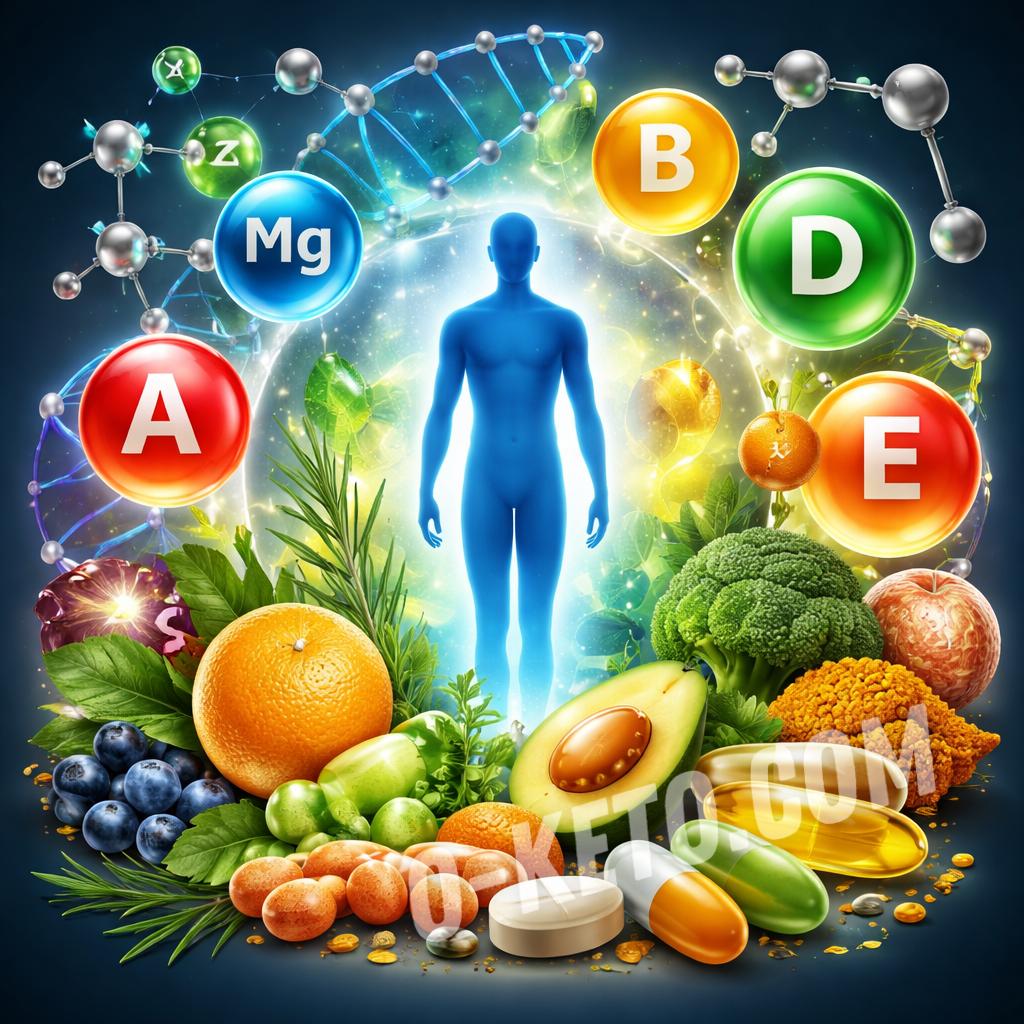
Orthomolecular medicine is a branch of medicine and nutrition science focused on restoring and maintaining health through optimal concentrations of biologically active substances naturally present in the human body. These substances include vitamins, minerals, amino acids, fatty acids, antioxidants, and coenzymes.
The foundation of this approach is the idea that for normal cell function, physiologically optimal levels of nutrients are important, rather than just the minimum acceptable levels.
Unlike symptomatic medicine, the orthomolecular approach views the body as a unified biochemical system, where deficiencies, excesses, and imbalances of nutrients directly affect organ function, hormonal regulation, nervous system activity, and immunity.
Core Principles of Orthomolecular Medicine
Orthomolecular medicine is based on fundamental principles of human biochemistry and physiology:
an individualized approach to assessing nutritional status and metabolic characteristics;
restoration of optimal, rather than minimal, levels of vitamins and minerals;
consideration of interactions between nutrients and with the hormonal system;
focus on cellular nutrition and mitochondrial function;
prevention of chronic diseases through correction of deficiencies;
use of bioavailable forms of nutrients with proven absorption.
An important aspect is the understanding that blood tests do not always reflect intracellular levels of nutrients. Therefore, indirect markers, functional symptoms, and data from spectral analysis of hair may be used in practice.
History and Development
The term “orthomolecular medicine” was proposed by Linus Pauling in 1968. He viewed health as a result of optimal molecular environments for cells and believed that many diseases are associated with chronic deficiencies of vitamins and minerals. Pauling paid particular attention to vitamin C, the role of antioxidants, and support for the immune system.
Subsequently, the ideas of orthomolecular medicine developed within the frameworks of functional medicine, integrative approaches, and clinical nutrition science. Data have been accumulated on the role of magnesium, B vitamins, omega-3 fatty acids, zinc, selenium, and other nutrients in regulating the nervous system, vascular tone, and energy metabolism.
Application in Practice. The orthomolecular approach is applied in comprehensive work with various conditions:
reduced immune protection and frequent infections.
Targeted nutritional protocols are often used in practice.
For example, in the case of magnesium deficiency, not only its level is corrected, but also its ratio with calcium and vitamin D.
In nervous system disorders, the needs for vitamins B1, B6, B12, as well as for fatty acids and antioxidants, are taken into account.
Diagnosis and Nutrient Selection
Orthomolecular medicine pays great attention to assessing the functional state of the body. In addition to standard tests, the following may be considered:
symptoms indicating hidden deficiencies;
diet and lifestyle history;
stress load and adrenal state;
data from spectral analysis of hair;
the body’s reactions to nutrient correction.
Dosing is determined taking into account individual tolerance, age, level of physical activity, and accompanying conditions.
Criticism and Limitations
The main criticism of orthomolecular medicine is related to the risk of uncontrolled use of high doses of supplements. An improper approach can lead to imbalances of minerals, toxic effects, and overload of detoxification systems.
It is also important to consider that nutrients do not replace emergency medical care and are not an alternative to surgical or drug treatment in acute conditions. The orthomolecular approach is most effective in prevention and comprehensive support of the body.
Conclusion
Orthomolecular medicine views health as a result of balanced biochemistry and complete cellular nutrition. When applied correctly, it allows for the identification and elimination of deep-rooted causes of functional disorders, enhances the body’s resilience to stress, and slows the development of chronic diseases.
The key condition for effectiveness remains an individualized approach and working with a specialist who understands physiology, biochemistry, and the interactions of nutrients in the human body.
Any remaining questions? Ask chatGPT.:
If you have any questions о термине "Orthomolecular medicine", you can ask them to our bot.
Ask a question
List of videos from YouTube by request "Orthomolecular medicine":
Only verified information backed by research, physiology, and biochemistry about your health.
Why diseases occur, how to heal with proper nutrition, vitamins, and minerals, what therapeutic doses to take, and which diet is optimal for your health. What tests to take and how to interpret the results.
In the settings, you can also enable knowledge based on GNM and homeopathy.
We use cookies to ensure the best presentation of our website. If you continue to use the site, we will assume that you are satisfied with it.