


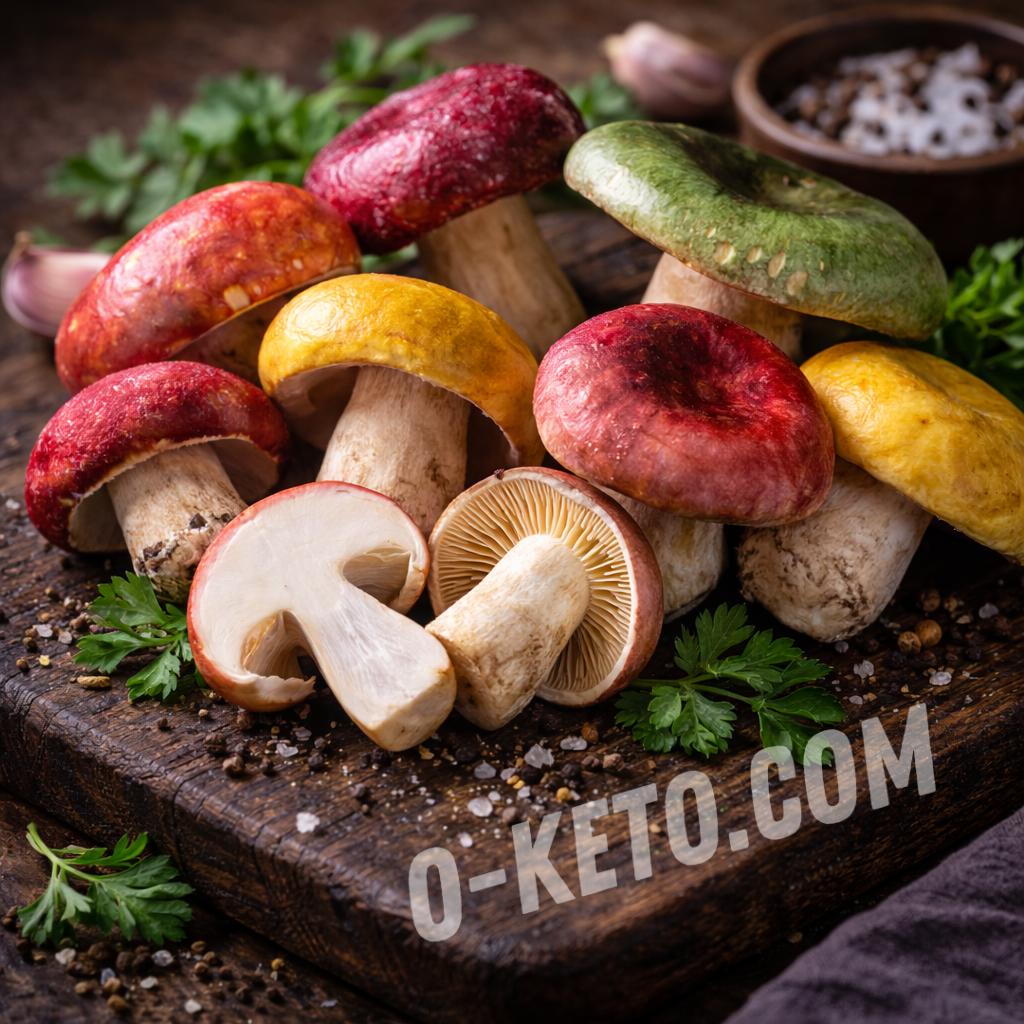

Milk caps — are one of the most common forest mushrooms belonging to the genus Russula. They can be found in almost all types of temperate forests. These mushrooms are well known among foragers due to their bright caps in various shades — from green and yellow to bright red and purple.
The name “milk cap” is associated with the fact that some species can be consumed after minimal culinary processing. However, it is important to remember that not all milk caps have a pleasant taste, and some species can cause stomach irritation. Therefore, it is essential to have a good understanding of the species when foraging.
Description and features of milk caps
Milk caps have a characteristic external structure that makes them easy to distinguish from many other mushrooms:
- Cap: smooth, sometimes slightly velvety, 5–12 cm in diameter.
- Color: green, yellow, pink, red, purple, and other shades.
- Gills: white or cream, brittle.
- Stem: white, cylindrical, firm.
- Flesh: fragile and brittle.
Milk caps form mycorrhiza with trees, most often with birches, pines, spruces, and oaks. Therefore, they can be found in mixed and coniferous forests.
Varieties of milk caps
There are several hundred species of milk caps, but the following are the most well-known among foragers:
- Green milk cap (Russula virescens) — one of the best edible species.
- Edible milk cap (Russula vesca) — a popular edible mushroom with a mild taste.
- Golden milk cap (Russula aurea) — a bright mushroom with a pleasant aroma.
- Bitter milk cap (Russula emetica) — an inedible species with a very sharp taste.
Nutritional value
Milk caps are a low-calorie product and contain a small amount of carbohydrates, making them suitable for various diets.
Milk caps also contain important vitamins and minerals:
- B vitamins;
- vitamin D;
- potassium;
- phosphorus;
- magnesium;
- iron.
The glycemic index of mushrooms is very low, so they have little effect on blood sugar levels.
Use of milk caps in cooking
Edible species of milk caps are widely used in home cooking. They have a mild mushroom flavor and are suitable for many dishes.
Popular cooking methods:
- frying in a pan;
- stewing;
- mushroom soups;
- casseroles;
- marinating;
- salting.
Before cooking, it is recommended to clean the mushrooms from debris and, if necessary, lightly boil them. This helps to enhance the flavor and remove any possible bitterness.
Storage
Fresh milk caps are best used immediately after foraging, as they are quite fragile and do not store well for long periods.
To preserve the mushrooms, the following methods can be used:
- freezing;
- marinating;
- salting;
- drying.
Properly prepared milk caps have a mild flavor and can be an excellent addition to various dishes, adding a rich forest aroma to them.


