


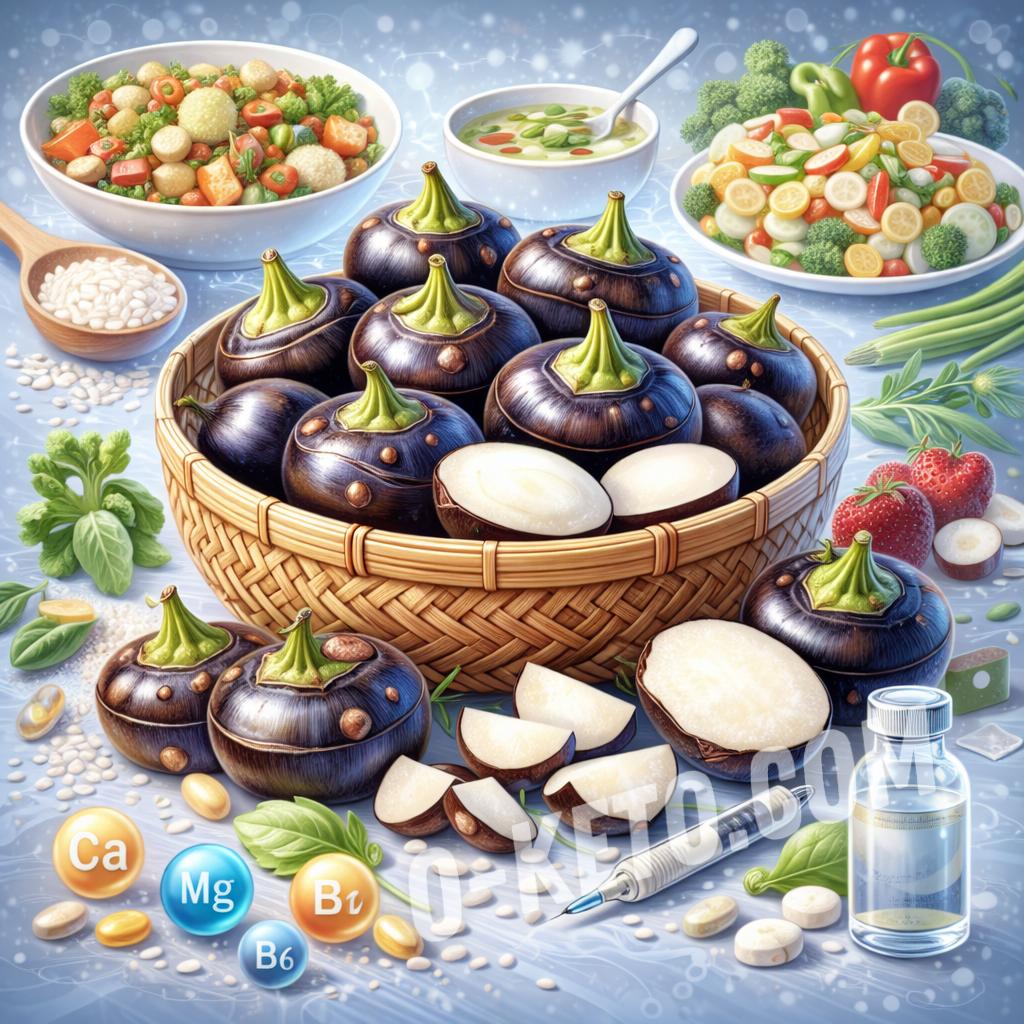

The Chinese water chestnut, also known as water chestnut, — is an edible tuberous plant widely used in Asian cuisine. Despite its name, it is not related to nuts and is not a fruit of a tree.
The product is valued for its crunchy texture, neutral-sweet taste, and resistance to heat treatment, which allows it to retain its structure even after boiling and stewing.
History and Origin
The Chinese water chestnut has been cultivated for a long time in China, India, and Southeast Asian countries.
It grows in freshwater bodies and rice fields, where it forms underground tubers.
In traditional Chinese cuisine, the product is used both fresh and as part of hot dishes, soups, and snacks. In Asian culture, the water chestnut is valued not only as a food ingredient but also as a product associated with a cooling effect and support for digestion.
Nutritional Value
The Chinese water chestnut contains a moderate amount of carbohydrates and is virtually fat-free. Its composition includes:
- B vitamins, which are involved in energy metabolism;
- Vitamin C, which supports antioxidant protection;
- Potassium, necessary for water-electrolyte balance;
- Magnesium, involved in muscle and nervous system function;
- Fiber, which improves intestinal function.
The calorie content is about 70–75 kcal per 100 g. The product is not low in carbohydrates, so it can only be used in limited amounts during a keto diet.
Glycemic Index and Metabolism
The glycemic index of the Chinese water chestnut is in the average range. This means a moderate impact on blood glucose levels.
Due to the presence of fiber, the increase in sugar is not sharp; however, large portions may result in a noticeable glycemic load.
For people with insulin resistance and diabetes, the amount of the product should be strictly dosed.
Health Effects
When consumed in moderation, the Chinese water chestnut may:
- Support cardiovascular system function;
- Promote normal intestinal peristalsis;
- Provide an additional source of energy;
- Diversify the diet without excessive calorie content.
However, the product is not medicinal and does not compensate for deficiencies in protein or fats.
Cooking Methods
The Chinese water chestnut is used in various culinary techniques:
- Consumption raw in salads and cold appetizers;
- Adding to soups and broths a few minutes before cooking is finished;
- Stir-frying with vegetables, meat, or seafood;
- Baking and stewing as part of complex dishes.
The main feature of the product — is the preservation of crunchiness after heat treatment, making it a valuable textural component.
Storage and Precautions
Fresh water chestnuts should be stored in the refrigerator in an airtight package. Before consumption, they must be thoroughly cleaned and rinsed.
People with gastrointestinal diseases or individual intolerance to new products should introduce them into their diet gradually.
Overall, the Chinese water chestnut is a niche but interesting product that can diversify the diet, add texture to dishes, and expand culinary possibilities when consumed mindfully and in moderation.


