


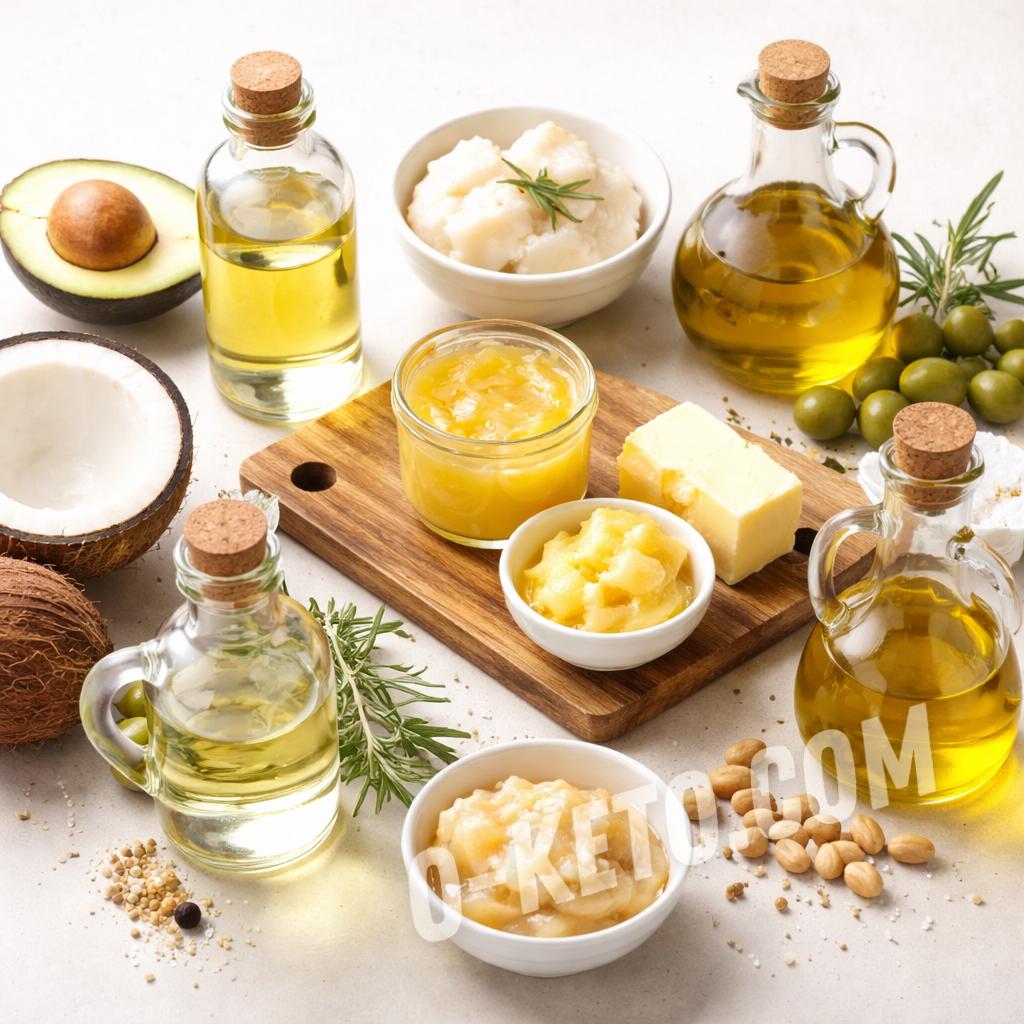

The smoke point indicates at what temperature fat or oil begins to noticeably smoke. This is a practical guideline for choosing fats for different cooking methods: the higher the heating temperature, the more important it is to use more stable options.
However, a high smoke point does not always mean better biochemical stability, so for everyday cooking, it is important to consider both the origin of the fat and its degree of refinement.
What smoke point means
When oil or fat reaches its smoke point, sensitive compounds begin to break down more actively, altering the taste and smell, and the product becomes less suitable for further heating.
For frying and baking, fats with a higher smoke point are usually chosen, while for salads and ready dishes, less stable oils can be used without strong heating.
Vegetable oils
| Type of oil | Smoke point |
| refined avocado oil | 270°C |
| rice bran oil | 254°C |
| refined or light olive oil | 240°C |
| soybean oil | 232°C |
| peanut oil | 232°C |
| corn oil | 232°C |
| refined coconut oil | 232°C |
| safflower oil | 227°C |
| refined sesame oil | 210°C |
| vegetable oil | 204–232°C |
| canola oil | 204°C |
| grapeseed oil | 199°C |
| unrefined or natural avocado oil | 190°C |
| unrefined sesame oil | 177°C |
| natural or unrefined coconut oil | 177°C |
| extra virgin olive oil | 163–190°C |
Animal fats and oils
| Type of fat | Smoke point |
| clarified butter, ghee | 252°C |
| beef fat | 204°C |
| chicken fat or schmaltz | 190°C |
| duck fat | 190°C |
| pork fat or lard | 188°C |
| butter | 150°C |
How to use in the kitchen
For high heat, refined avocado oil and ghee are the best options.
For moderate frying, beef, pork, duck, and chicken fat can be used.
Butter and unrefined oils are better suited for gentler heating or adding to already prepared dishes.
If both culinary and metabolic stability are important, more stable fats with a lower tendency to oxidize when heated are usually preferred in everyday diets. Therefore, for hot dishes, ghee, beef fat, lard, and coconut oil are often chosen, while delicate unrefined oils are reserved for cold applications.


