


Sucrose
Ordinary table sugar: a disaccharide made of glucose and fructose. For keto, sucrose is problematic because it combines a fast glucose rise, fructose load on the liver, weak satiety and easy overconsumption in drinks, desserts, sauces and processed foods.
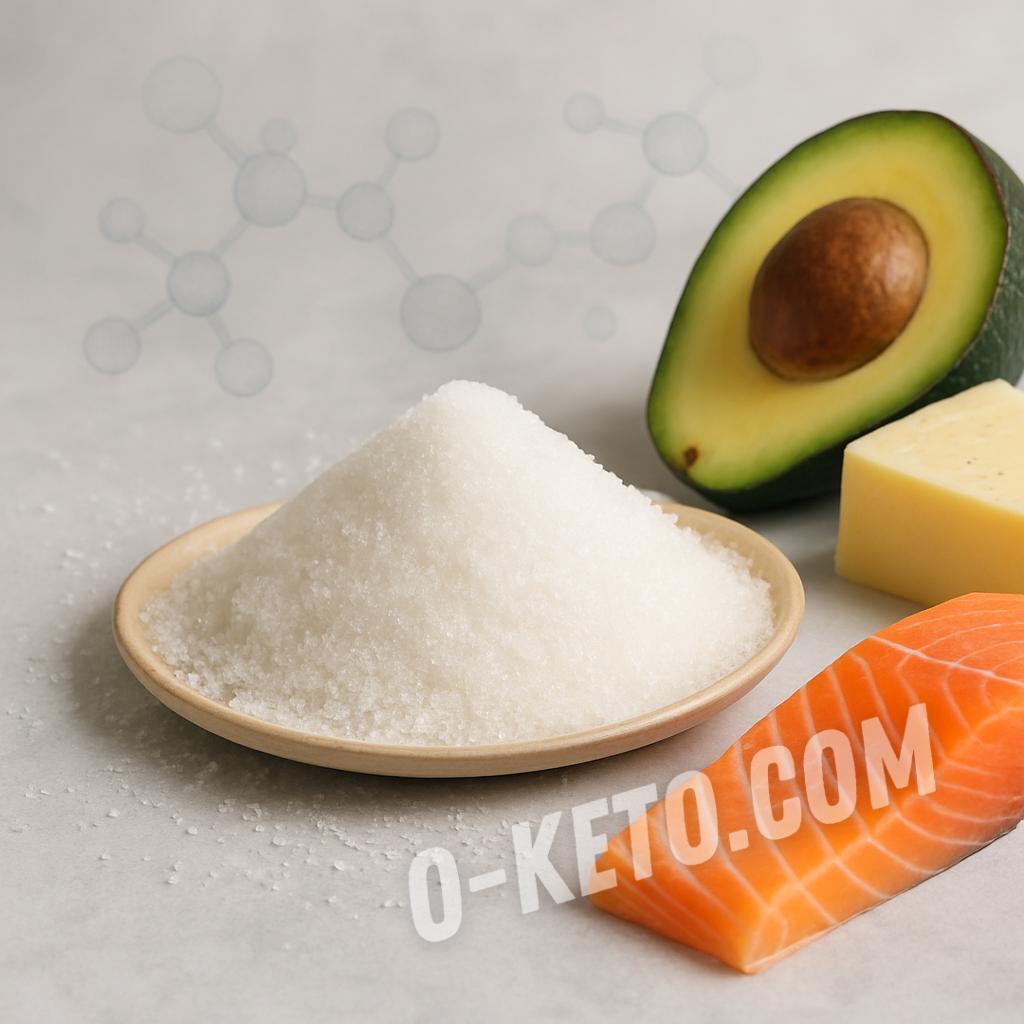
Sucrose is a disaccharide made of one glucose molecule and one fructose molecule. In everyday language, it is ordinary table sugar: beet sugar, cane sugar, white sugar, brown sugar, raw sugar or sugar inside sweet products. Different sugars may differ in taste, color and trace impurities, but their metabolic core is the same. During digestion, sucrose is split by sucrase, providing glucose and fructose.
On keto and LCHF, sucrose is usually excluded or strongly limited. The reason is not that the molecule is a poison, but that it quickly adds carbohydrates, raises blood glucose, delivers fructose to the liver and satisfies poorly. Liquid and semi-liquid forms are especially problematic: sweet drinks, juices, syrups, sweet coffee, desserts, sauces and sweetened yogurts. They are easy to consume in large amounts before satiety appears.
Glucose plus fructose
Sucrose combines two different metabolic pathways. Glucose directly raises blood sugar and requires an insulin response. Fructose is handled more by the liver and, when energy intake is excessive, can contribute to fat synthesis and higher triglycerides. Sucrose therefore differs from pure glucose and from starch, which digests mostly into glucose. Its effect is not only about glycemia, but also about liver fructose metabolism.
This is especially important with fatty liver disease, high triglycerides, insulin resistance and type 2 diabetes. In these situations, sucrose, honey, syrups and sweet drinks usually work against the goal, even when the source sounds natural. Honey, coconut sugar, cane sugar and agave syrup may have different flavors and marketing, but they still carry a sugar load.
Where sucrose hides
Obvious sources include sugar, candy, baked goods, cakes, sweet drinks, jam, marmalade, ice cream and desserts. Less obvious sources include ketchup, store-bought sauces, marinades, sausages, salad dressings, yogurts, sweet curd products, muesli, bars and low-fat products. In ingredients, sucrose may appear as sugar, cane sugar, brown sugar, syrup, caramel, molasses or part of a more complex sweet ingredient.
For low-carb eating, both the word sugar and the carbohydrate line matter. A product may not contain sucrose as a separate ingredient but may contain syrups, maltodextrin, fructose, glucose or starch. Metabolically, that may not be any better. If a product is sweet and processed, the absence of the word sugar does not guarantee keto compatibility.
Sucrose and appetite
Sweet taste itself is not always a problem, but sucrose combines sweetness with fast calories. For many people, sweet foods satisfy less than protein-rich meals and more easily trigger continued eating. This is not only willpower. Sweet drinks, desserts and soft baked goods provide fast access to energy, require little chewing and often combine sugar with fat, salt and flavorings.
On keto, after time without sugar, sensitivity to sweetness often changes. For some people, a small amount is enough to bring back cravings for sweet foods. Others can calmly use moderately sweet keto desserts made with erythritol or stevia. Behavioral response matters as much as carbohydrate grams. If sweet taste triggers loss of control, even low-carb sweets may need to be reduced.
Replacing sugar
Replacing sucrose with a sweetener can help lower carbohydrates, but it does not solve everything automatically. Erythritol, stevia, monk fruit and allulose usually affect glucose much less than sugar. Maltitol, syrups and some diet sweets can raise glucose noticeably or cause gut symptoms. A sugar-free dessert can still be calorie-dense and contain nut flour, cream and a lot of fat.
Practically, replacements work better as a bridge than as a new dietary foundation. If someone eats sugar-free sweets every day, the brain and appetite may still revolve around a dessert pattern. For weight loss, diabetes and food addiction, reducing the frequency of sweet taste itself can be more useful than only replacing sucrose with another sweet ingredient.
Practical takeaway
Sucrose is a clear and fast carbohydrate source, but for keto it is almost always unnecessary. It provides glucose, fructose, weak satiety and a high chance of overeating. Natural origin, brown color or a cane-sugar label do not change the main point: it is a sugar load that fits poorly with ketosis and glucose control.
The best approach is to remove sucrose from everyday food, read sauces and ready-made products carefully, avoid drinking sweet calories and use sweeteners cautiously. If sweetness is needed, it is better kept rare, portion-controlled and free from the illusion that “without white sugar” automatically means low-carb.
If you have any questions about the term "Sucrose", you can ask them to AI. Please note, a low-cost OpenAI model is used. It may answer questions about disease treatment with errors!


