


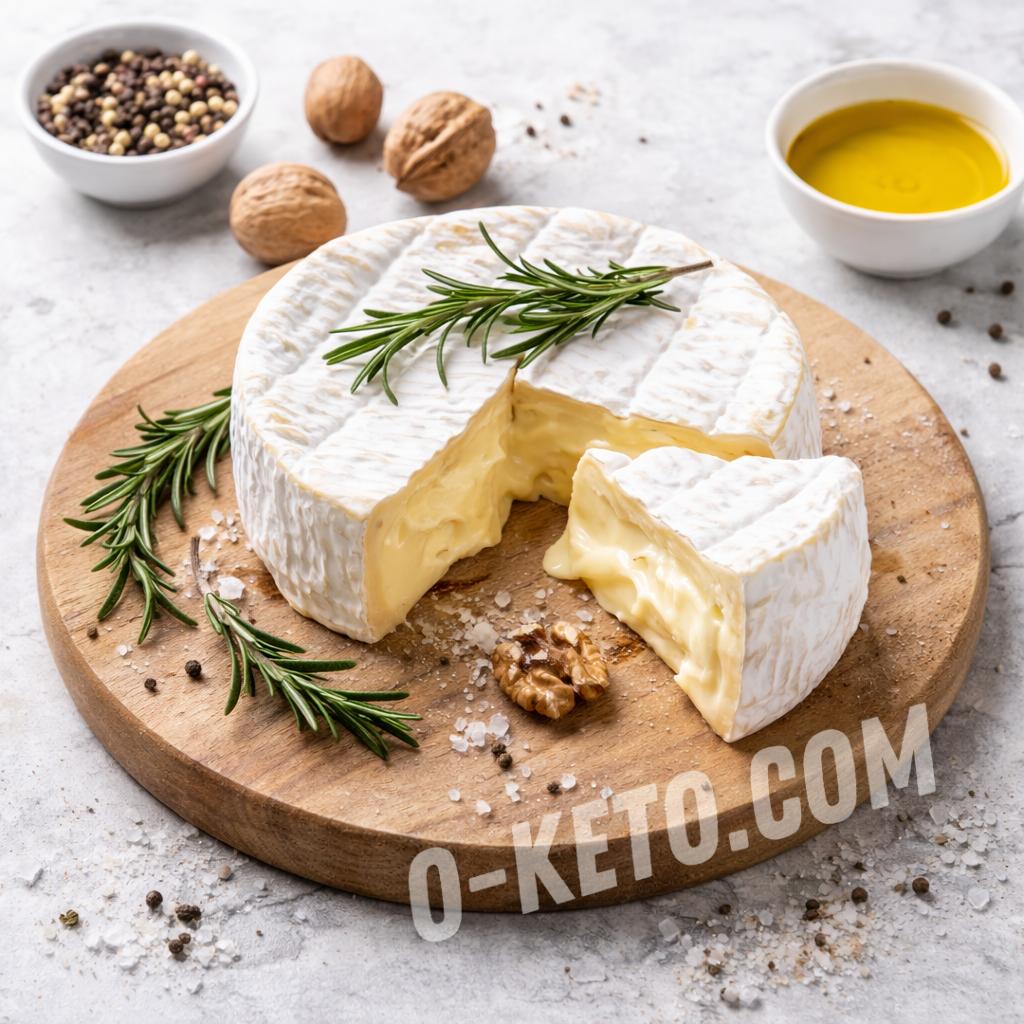

Camembert — a soft French cheese with a white mold rind and creamy texture. It is known for its rich aroma and delicate consistency, which becomes more liquid as it ripens. Due to its high fat content and minimal carbohydrates, camembert fits well into low-carb and keto diets.
History and Origin
Camembert originates from the Normandy region in northern France. The cheese began to be produced in the late 18th century in the village of Camembert, from which it gets its name. Traditionally, it is made from cow’s milk using mold cultures that form the characteristic white rind.
Over time, camembert has become one of the most famous French cheeses. Due to its texture and flavor, it has gained widespread popularity around the world and is now produced in many countries, although the classic version is still associated with Normandy.
Nutritional Value
Camembert is characterized by high nutritional density. It contains a significant amount of fat and complete protein, while the carbohydrate content is minimal.
| Calories | 280–320 kcal |
| Protein | 18–21 g |
| Fat | 22–26 g |
| Carbohydrates | 0.5–1 g |
The fats in camembert include saturated and monounsaturated fatty acids, which provide energy and participate in metabolism.
Main Vitamins and Minerals:
- calcium is involved in the formation of bones and teeth;
- phosphorus is necessary for energy metabolism;
- vitamin B12 supports the nervous system;
- B vitamins are involved in metabolism;
- vitamin A is important for vision and skin health.
Health Benefits
Camembert contains easily digestible milk protein and fats that provide prolonged satiety. The mineral composition of the cheese supports bone tissue and energy metabolism.
The mold cultures used during the cheese ripening process participate in fermentation and form the characteristic taste and aroma of the product.
Camembert in Low-Carb and Keto Diets
Due to its very low carbohydrate content, camembert is well-suited for low-carb diets. Its high fat content makes it a convenient source of energy for keto eating.
Typically, a portion of 30–60 g is sufficient for one meal. Camembert can be enjoyed as a standalone snack or used in various dishes.
Culinary Uses:
- serving as a cheese appetizer;
- baking a whole wheel of cheese;
- adding to salads;
- using in sauces;
- preparing hot appetizers and casseroles.
With its soft texture and rich flavor, camembert remains one of the most popular soft cheeses and is widely used in modern cuisine.


