


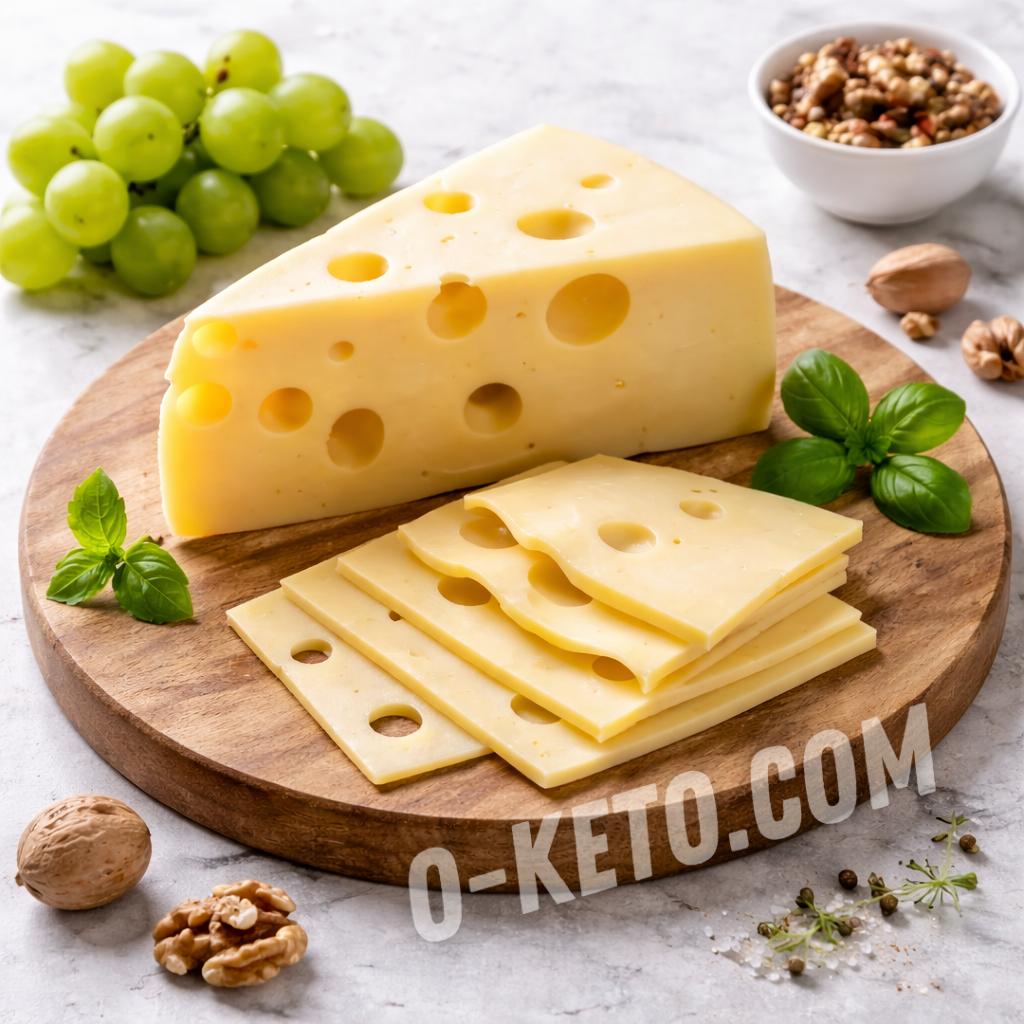

Maasdam — a semi-hard cheese of Dutch origin, known for its sweet-nutty flavor, large holes, and soft elastic texture. It is made from cow’s milk and is characterized by good meltability, which makes it widely used in both cold appetizers and hot dishes. Its low carbohydrate content and high fat content make Maasdam a suitable product for low-carbohydrate diets.
History and Origin
Maasdam appeared in the Netherlands in the second half of the 20th century. The cheese is named after the city of Maasdam in the province of South Holland. It was developed as an alternative to traditional Swiss cheeses with large holes, retaining the characteristic appearance but giving it a softer and sweeter taste.
During the aging process, characteristic large holes form in the cheese. They appear due to the activity of lactic acid bacteria that release gas. Aging usually lasts from a few weeks to several months, during which the texture and aroma of the product develop.
Nutritional Value
Maasdam is classified as a nutritious cheese with a high content of protein and fat. It contains virtually no carbohydrates, making it a convenient product for low-carbohydrate diets.
The fats in Maasdam include saturated and monounsaturated fatty acids, which provide energy to the body and participate in metabolic processes.
Main Vitamins and Minerals
- calcium is involved in the formation of bone tissue and teeth;
- phosphorus is necessary for energy metabolism;
- vitamin B12 supports the nervous system;
- B vitamins are involved in metabolism;
- vitamin A is important for vision and skin health.
Health Benefits
Maasdam contains complete milk protein, which is easily absorbed and participates in tissue repair. The mineral composition of the cheese helps maintain bone tissue and the normal functioning of metabolic processes.
Due to its high nutritional density, the cheese is very filling and can serve as an energy source for an active lifestyle.
Maasdam in Low-Carbohydrate and Keto Diets
Due to its minimal carbohydrate content, Maasdam is well-suited for low-carbohydrate diets. Its high fat content allows it to be used as an energy source in keto diets.
The optimal portion is usually 30–60 g per meal. The cheese can be consumed as a standalone snack or added to various dishes.
Culinary Uses:
- serving as part of cheese platters;
- adding to salads;
- using in sandwiches;
- preparing hot dishes and casseroles;
- using for pizza and sauces.
With its soft sweet-nutty flavor and good meltability, Maasdam is widely used in modern cuisine and is suitable for both simple home dishes and complex gastronomic combinations.


