


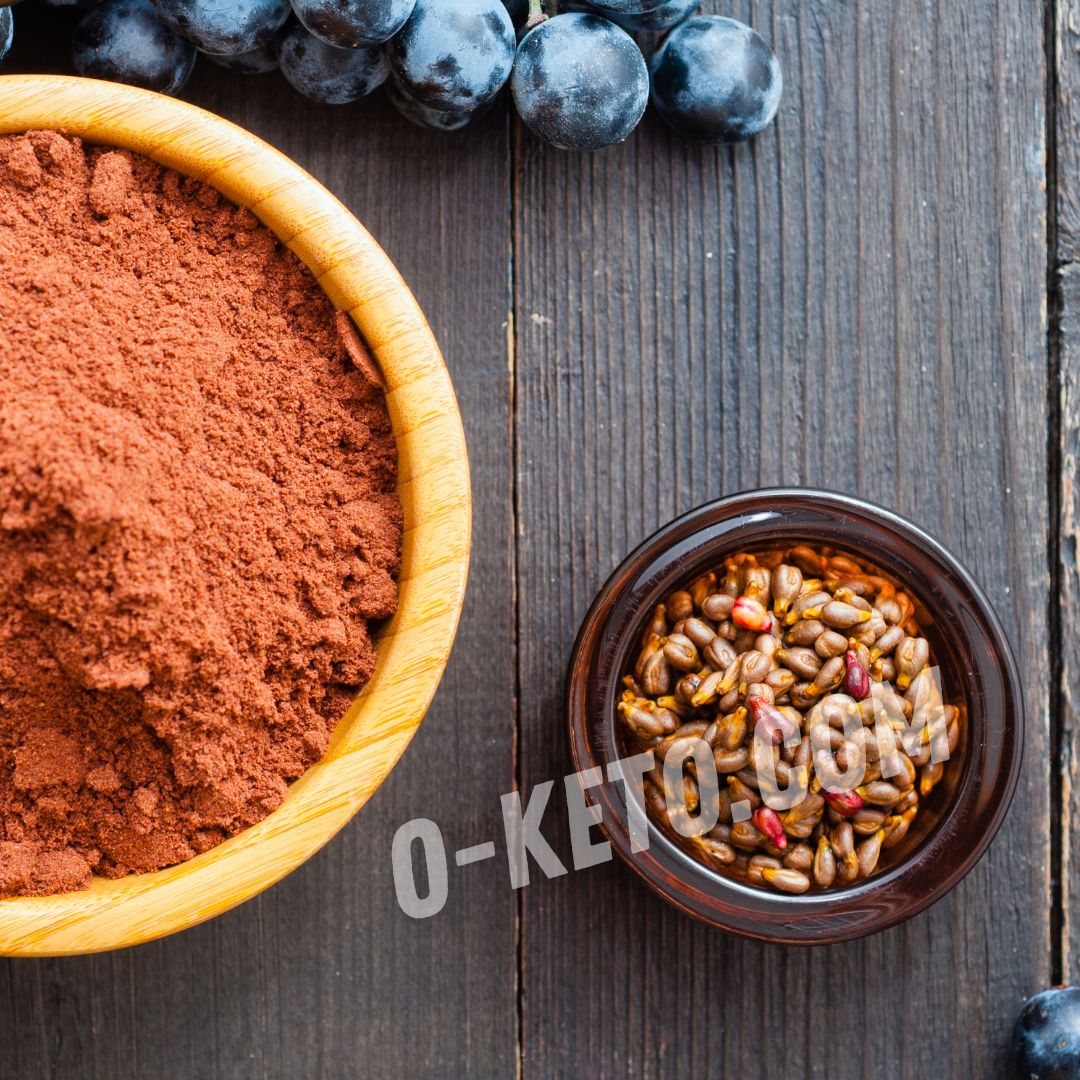

Grape flour is usually made from grape seeds, skins or a mix of pomace left after juice and wine production. It is a dark aromatic powder with a tart flavor, fruity acidity and noticeable fiber. In cooking it is used not as a main flour, but as an addition for color, aroma and light astringency in sauces, crispbreads, savory baking, desserts and marinades.
Grape flour may contain polyphenols, including resveratrol, vitamins, minerals, fiber and about 350 kcal per 100 g. For low-carb eating, the deciding points are the carbohydrates on the specific label and the amount of flour in the recipe, not only the attractive composition.
Nutrition
The composition of grape flour depends strongly on the raw material. Seed flour will be richer in coarse fiber and plant polyphenols, while a product with more skin or pulp may contain more fruit carbohydrates and a more noticeable sweet-tart note. General tables are therefore only estimates.
Grape flour may contain fiber, potassium, magnesium, iron, calcium, vitamin E, B vitamins and polyphenols. It is often described as having a relatively low glycemic index, but this does not make it unlimited. The flour is concentrated: a small spoon gives flavor, while a large share in dough already changes the carbohydrate load of the dish.
Is It Keto-Friendly?
For strict keto, grape flour fits only as a small addition if the label contains no sugar, wheat flour, starch or other fillers. It should not replace almond or flax flour in the same volume. Even if some carbohydrates are tied to fiber, grape material still needs counting.
A practical approach is to use one teaspoon for a whole sauce, cream or small batch of crispbreads. If the product is needed only for color and light tartness, that dose is often enough. In a looser LCHF plan, a larger amount may be possible, but it should be counted with the rest of the ingredients.
How to Use It
The flavor of grape flour pairs well with cocoa, cinnamon, vanilla, nuts, almonds, soft cheeses, cottage cheese, cream, duck, beef, baked cheese and sauces for meat. In keto recipes it usually plays the role of a spicy-fruity accent rather than a dough base.
Practical options include:
- a pinch in a sauce for meat or poultry;
- a teaspoon in a sugar-free chocolate cream;
- an addition to almond flour for dark crackers;
- part of a marinade with oil, salt and spices;
- a light tart note in cottage cheese or plain yogurt.
How to Choose and Store
It is useful when the producer states the raw material: seeds, skins, pomace or a mix. The ingredient list should not contain sugar, syrups, wheat flour, rice flour, starch or flavorings. If the color is very bright and the smell is candy-like, the additives should be checked carefully.
Store grape flour in a dry place, tightly closed and away from light. Polyphenols and residual oils are sensitive to air, while moisture quickly causes lumps. A normal smell is grapey and tart, without mold, dampness or rancidity.
Limits and Substitutes
The main limit is uncertainty of composition and carbohydrates. Two grape flours can behave differently: one may work almost like tart fiber, another like fruit flour. In sensitive digestion, a large amount of seed fiber may cause discomfort.
If dark color and light bitterness are needed, unsweetened cocoa, ground flax or a little coffee in the recipe may work better. If fruity acidity is needed, lemon zest, a little sugar-free berry powder or a drop of wine vinegar in sauce can help. For structure in keto baking, almond, flax, coconut flour and psyllium are more reliable.
Portion and Common Mistakes
Grape flour may seem light because it is linked with skins and seeds, but its taste is concentrated. If too much is added, a dish can become dry, tart and dark. It is better to start with half a teaspoon, especially in creams and sauces.
The second mistake is using it in pale baking while expecting a neutral result. It changes color and flavor even in small doses. It is better used where a dark shade makes sense: cocoa desserts, nut crackers, meat sauces and spiced marinades. Then the product works as an accent and does not fight the recipe.
Adding It to Dough and Sauces
Grape flour is easier to mix with dry ingredients first rather than adding it straight into liquid. In dough it colors the mixture quickly, increases astringency and may absorb moisture, so the recipe is best adjusted in small steps. When adding it to an almond or flax base, let the dough stand for a few minutes before deciding whether more liquid is needed.
In sauces, this flour behaves differently: a small pinch gives color and grapey depth, while a large amount can make the flavor rough. For a first try, use it in sauces for duck, beef, cheese or mushrooms, where astringency feels intentional. In sweet recipes, it is easier to pair with cocoa, nuts and a sugar-free creamy base.
Substitution options in recipes
Flaxseed flour. Plus 2% cocoa powder. Grapes are rich in polyphenols and provide astringency. The mixture of flaxseed with cocoa gives a similar tannic bitterness and dark color; it absorbs more water - add 10% liquid.


