


5-methyltetrahydrofolate
The active folate form involved in methylation, homocysteine metabolism, DNA synthesis and nervous-system function. It differs from folic acid because it is already in a biologically ready form and does not require several conversion steps.
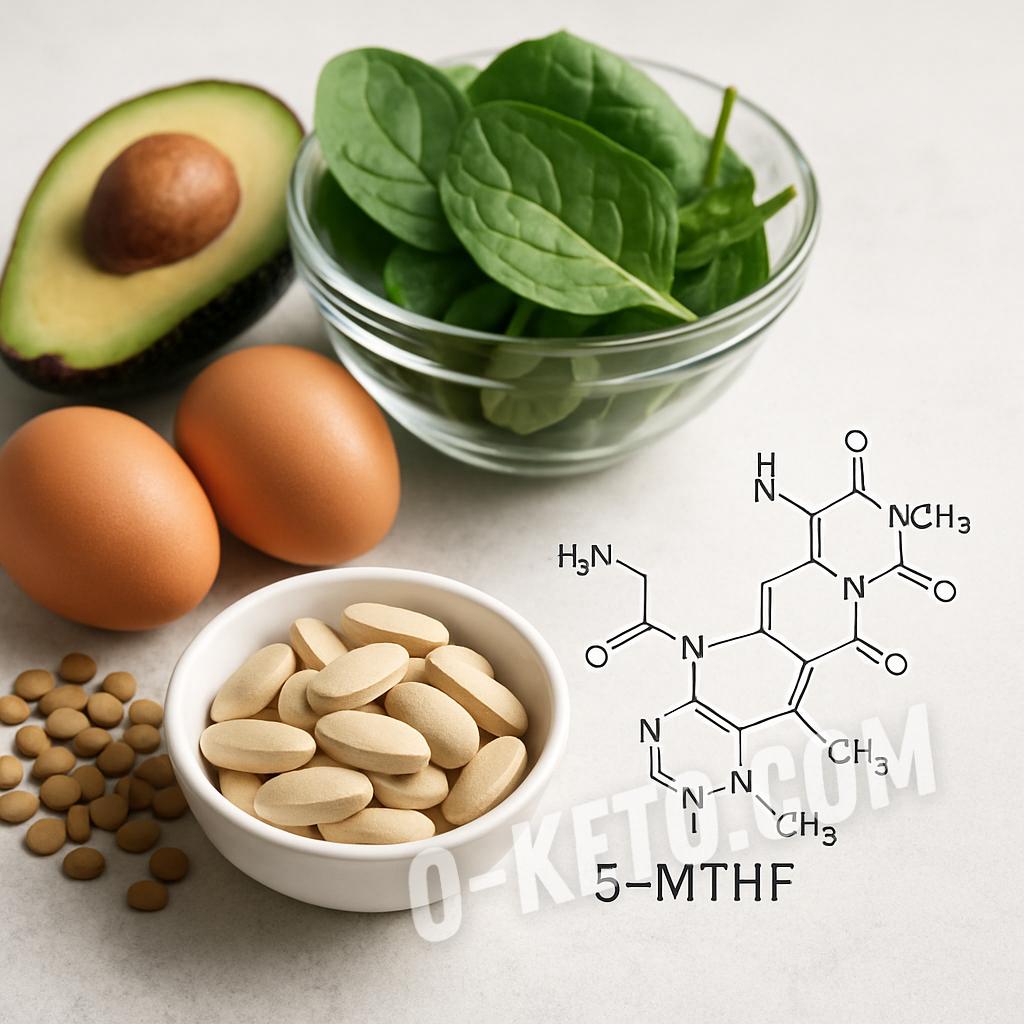
5-methyltetrahydrofolate, or 5-MTHF, is the active folate form used in the methylation cycle. It helps transfer methyl groups, supports the conversion of homocysteine back to methionine, and is involved in DNA synthesis, cell division, blood formation, nervous-system function and tissue development. It is not a separate miracle nutrient, but one working form of vitamin B9.
The main difference from ordinary folic acid is that 5-MTHF is already closer to the final biologically active form. Folic acid from supplements must be reduced and converted through several enzyme steps, and in some people these steps are less efficient. This is why 5-MTHF is often discussed in the context of high homocysteine, MTHFR variants, pregnancy planning, pregnancy, anemia patterns and neurological complaints.
Why the body needs it
Folate forms participate in the creation of new cells, so the need is higher during growth, pregnancy, tissue repair and active blood formation. Without enough folate, nucleic-acid synthesis becomes less efficient, and red blood cells, mucous membranes, skin, immune cells and nervous tissue can suffer. A classic laboratory sign of marked deficiency is megaloblastic change in blood cells, but early symptoms can be much less specific.
Homocysteine metabolism is another important area. 5-MTHF donates a methyl group to a vitamin B12-dependent enzyme that converts homocysteine into methionine. If folate, B12, B6, riboflavin or thyroid function is inadequate, homocysteine may rise. This marker does not explain vascular health on its own, but it can reveal stress on methylation and neighboring nutrient gaps.
How it differs from folic acid
Folic acid is a synthetic oxidized form of vitamin B9, convenient for food fortification and many supplements. 5-MTHF is a reduced form that enters the methyl cycle more directly. In practice this may matter for people who tolerate folic acid poorly, have high homocysteine, have confirmed issues in folate metabolism, or are in situations where a clinician specifically chooses the active form.
However, 5-MTHF is not automatically better for everyone. Dose, form, combination with B12 and baseline testing matter more than the attractive name. A common mistake is taking large amounts of active folate while ignoring B12 deficiency. That can improve some blood markers while neurological problems related to B12 deficiency continue to develop. For this reason, suspected deficiency should be evaluated as a whole network, not as one isolated vitamin.
Food, keto and LCHF
In a low-carbohydrate diet, folate usually comes from leafy greens, liver, eggs, avocado, asparagus, broccoli, Brussels sprouts, spinach and other green vegetables. Problems do not come from avoiding sugar itself, but from a poor food range: meat without greens or organ meats, monotonous meals, complete avoidance of vegetables, poor digestion or prolonged calorie deficit.
Liver is one of the densest sources of folate and B12, but it does not need to be eaten every day. The practical point is to rotate nutrient-dense foods and avoid turning keto into a diet of butter, coffee and a few protein foods. People taking metformin, proton-pump inhibitors, antiseizure medication or living with intestinal disease may have a higher risk of B-vitamin deficiencies, so “I eat low carb” is not enough context.
When supplementation may be appropriate
5-MTHF may be considered with confirmed folate deficiency, high homocysteine, pregnancy planning, malabsorption, some methylation-focused protocols and poor tolerance of folic acid. During pregnancy, form and dose should be chosen with a clinician. Folate is critical for early neural-tube development, and starting correction only after a positive pregnancy test can be late.
Supplements should not be chosen only because of a genetic test. An MTHFR variant is not a diagnosis and does not prove that a person needs high-dose active folate. The decision needs context: diet, B12 status, ferritin, complete blood count, homocysteine, medications, symptoms and tolerance. In some people, large doses of methylated forms can trigger anxiety, insomnia, irritability or headache.
How to think about safety
Before long-term folate use, it is useful to rule out B12 deficiency, especially in vegetarians, older adults, people after stomach surgery, those with autoimmune gastritis, or those taking metformin or acid-suppressing medication for a long time. Numbness, tingling, gait changes, memory problems or marked weakness should not be handled with folate alone without checking B12.
The practical value of 5-MTHF is not the fashionable word “methylation”, but precise support of a specific biochemical chain. It is useful when there is an indication, a reasonable dose and attention to neighboring factors. If the diet is poor in protein, greens, B12 and minerals, one capsule of active folate will not repair the whole metabolic system.
More about the nutrient:

If you have any questions about the term "5-methyltetrahydrofolate", you can ask them to AI. Please note, a low-cost OpenAI model is used. It may answer questions about disease treatment with errors!


