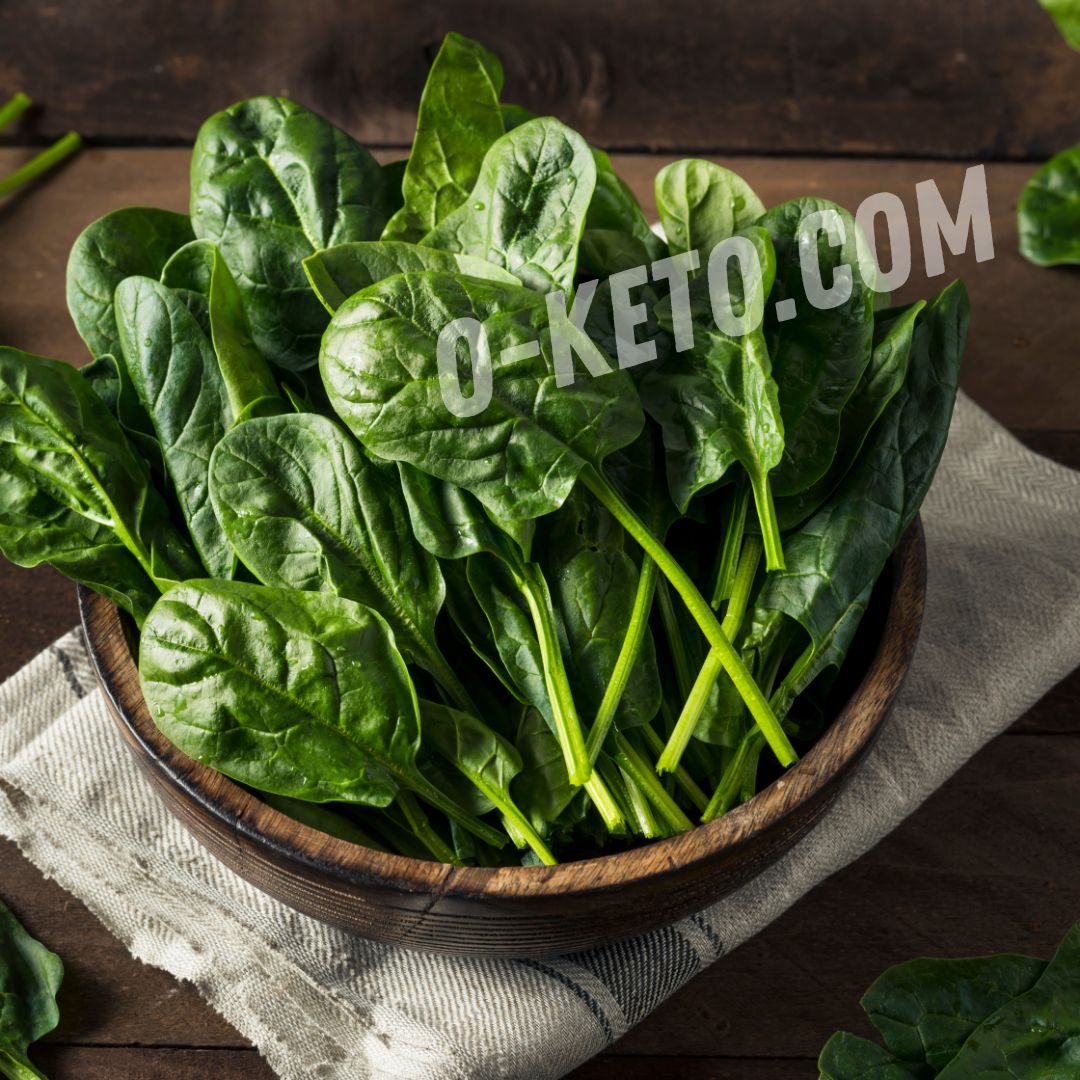

Spinach is a leafy green with a mild taste, tender leaves, and very broad culinary use. It is eaten fresh, quickly wilted in a pan, added to omelets, soups, sauces, casseroles, salads, and fillings. Unlike dense cabbage or root vegetables, spinach cooks in minutes and shrinks strongly in volume.
Fresh leaves bring juiciness and a green flavor to a dish, while cooked spinach becomes a soft vegetable base for eggs, fish, poultry, cheese, cream, and mushrooms. For low-carb cooking, it is one of the most convenient leafy greens: it needs little preparation, does not overpower the dish, and fits breakfast, side dishes, and sauces.
Nutrition
In 100 g of fresh spinach there are about 23 kcal, roughly 2.9 g of protein, 0.4 g of fat, and about 3.6 g of carbohydrates, of which about 2.2 g are fiber. These numbers show well why spinach is often used in diets where carbohydrates are tracked.
Spinach contains vitamin K, vitamins A and C, folate, magnesium, potassium, manganese, iron, and plant pigments lutein and zeaxanthin. In an ordinary plate, however, its main role is volume, greens, fiber, flavor, and the mineral part of the diet. Minerals from plants are absorbed differently, so spinach should not be treated as the only iron or magnesium source.
Place in keto and LCHF
Spinach fits keto and LCHF well: a portion has few digestible carbohydrates, plenty of leafy mass, and almost no sugar. It can be added to eggs, fish, chicken, turkey, beef, mushrooms, cheeses, cream, butter, olive oil, avocado, and nuts.
It is especially convenient where a dish previously used rice, potatoes, or pasta. Salmon with creamed spinach, an omelet with spinach and cheese, chicken in spinach sauce, salad with egg and avocado, or soup with greens all give volume without a starchy base. The main point is to avoid sweet sauces and breading.
Fresh and frozen spinach
Fresh spinach is better for salads, quick side dishes, and recipes where the shape of the leaves matters. Young leaves can be eaten raw; larger and denser leaves are often better after brief heating. Before use, rinse the leaves and dry them well, otherwise they will stew in excess water in the pan.
Frozen spinach is convenient for omelets, soups, cream sauces, casseroles, and fillings. It no longer needs long washing and sorting, but after thawing it is worth squeezing out extra moisture. If this is not done, the sauce becomes watery and a bake or filling may not hold its shape well.
How to cook
Spinach does not need long cooking. One to three minutes in a pan with butter, garlic, and salt is enough for the leaves to collapse and soften. Add it to soup near the end; in an omelet, use it after a quick wilt or add young small leaves directly to the egg mixture.
Good pairings include garlic, lemon juice, cream, butter, feta, parmesan, eggs, mushrooms, nutmeg, black pepper, sesame, salmon, chicken, and shrimp. Lemon juice or vinegar balances creamy dishes, while cheese adds saltiness, so final seasoning is best done at the end.
Spinach is high in oxalate. This does not make an ordinary serving dangerous for a healthy person, but after calcium-oxalate stones the amount of spinach and the overall diet should be discussed with a clinician or dietitian. Dietary calcium and adequate fluid intake may matter more than eliminating all greens.
Limits
Spinach contains a lot of oxalates. People whose clinician has limited oxalates should discuss frequency and portion size separately. Blanching or steaming and then draining the water can reduce some soluble oxalates, but it does not turn spinach into a product without limits.
Another important point is vitamin K. If a person takes medicines that require stable vitamin K intake, sharp changes in the amount of spinach in the menu are undesirable. This does not mean a complete ban, but portions should be predictable.
How to choose, store, and substitute
Fresh spinach should be firm and green, without slime, dark wet spots, or a stale smell. Keep leaves in the refrigerator, in a container or bag with a paper towel to absorb excess moisture. It is better to wash spinach right before cooking, not in advance: wet leaves spoil faster.
Spinach can be replaced with chard, young kale, arugula, beet greens, romaine lettuce, watercress, or mixed greens. For a creamy side dish, chard and young kale are closest; for salad, arugula and tender lettuce leaves; for an omelet, almost any soft green without tough stems.
Sources
- Eating, Diet, & Nutrition for Kidney Stones — National Institute of Diabetes and Digestive and Kidney Diseases
- Effect of different cooking methods on vegetable oxalate content — Journal of Agricultural and Food Chemistry
- Bioavailability of soluble oxalate from spinach eaten with and without milk products — Journal of Agricultural and Food Chemistry