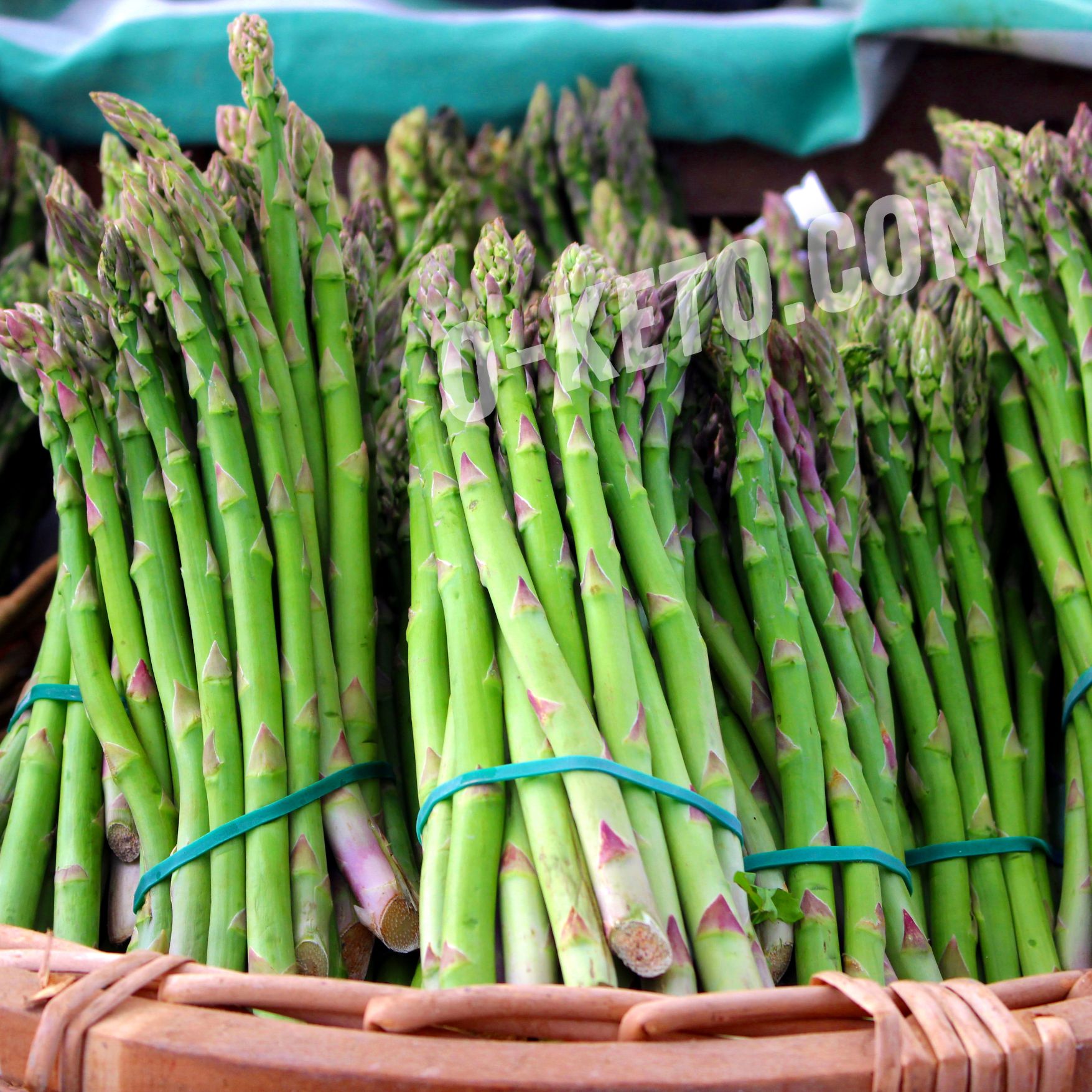

Asparagus is a tender green vegetable with a mild grassy flavor and firm, juicy stalks. It is quickly boiled, roasted, sauteed, or grilled to preserve its texture and fresh taste.
This vegetable is valued for its low calorie content, fiber, and micronutrients. Asparagus contains vitamins A, C, E, K, B6, folate, and small amounts of potassium, iron, copper, and calcium.
Nutrition
A serving of about 134 g usually provides around 27 kcal. Fresh asparagus contains about 4 g of carbohydrates per 100 g, some of which are fiber. It has little protein and fat, so in keto meals it is often paired with butter, eggs, cheese, fish, or meat.
Is it keto-friendly?
Asparagus fits low-carb eating well: it is low in sugar, has a low glycemic index, and provides a moderate amount of fiber. It adds volume and freshness to a meal without a significant carbohydrate load.
How to use it
Asparagus is best cooked briefly so the stalks stay slightly firm. The tough lower ends are usually trimmed or snapped off before cooking.
Good keto pairings include:
- butter, olive oil, or hollandaise sauce;
- eggs, salmon, chicken, bacon, or shrimp;
- parmesan, lemon juice, garlic, and fresh herbs.
How to choose
Fresh asparagus should be firm, with closed tips and no sour smell. Thin stalks cook faster, while thicker stalks are convenient for roasting or grilling.
How to store it
In the refrigerator, asparagus keeps better if the stalk ends are placed in a little water or wrapped in a damp towel. It should not be stored for long, because flavor and texture decline quickly.
What to substitute
In dishes with butter, eggs, or fish, asparagus can be replaced with green beans, broccoli, zucchini, or broccolini. The substitute will not fully match the flavor, but it will keep the dish low in carbohydrates.
Portion and Role in a Dish
Asparagus usually does not provide many calories and does not make a dish filling by itself. Its role is freshness, texture and a clean vegetable flavor. On keto, it works best next to fat and protein: eggs, fish, chicken, bacon, shrimp, butter or hollandaise sauce.
A normal serving of asparagus fits a low-carbohydrate menu well, but sauces and additions still need attention. Sweet glaze, flour in a sauce or breading changes the dish much more than the asparagus itself.
How Not to Ruin the Texture
The main mistake is cooking asparagus for too long. Then the stalks become soft, fibrous and watery. It is better to blanch briefly, sauté over high heat, roast quickly or grill until the stalk is tender but still holds its shape.
Thicker stalks can be lightly peeled at the bottom, while thin ones usually only need trimming. After cooking, asparagus is best finished with salt, lemon, butter, parmesan or herbs rather than a heavy sweet sauce.
White and Green Asparagus
Green asparagus has a brighter flavor and is easier to cook quickly. White asparagus is more delicate, but it often needs peeling and slightly more careful preparation. Both can fit keto when served without sweet sauces or starchy thickeners.
Frozen asparagus should not be thawed for a long time on the counter: it loses firmness quickly. It is easier to cook straight in a hot pan or add near the end of a hot dish.
What to Pair It With
Asparagus works well with foods that have a fuller flavor: poached eggs, omelet, salmon, chicken, bacon, shrimp, cream cheese and parmesan. Lemon or dry vinegar makes the flavor brighter, while butter or hollandaise adds satiety.
If asparagus is served as a side dish, it often lacks protein and fat. For a complete keto plate, pair it with fish, meat, eggs or seafood rather than only another serving of vegetables.
Common Mistakes
Avoid stalks with open, wet or slimy tips. It is also a mistake to store asparagus in dry warmth: it becomes limp quickly. If the stalks have already lost firmness, the flavor will be weaker even with proper cooking.
Serving After Cooking
Asparagus cools quickly and loses some firmness when reheated, so it is best cooked close to serving. If prep is needed, the stalks can be briefly blanched, cooled quickly and dried, then warmed in a pan with butter before eating. This keeps the texture cleaner than storing a fully cooked side for a long time.
For cold serving, dry asparagus thoroughly: excess water dilutes the dressing and makes the flavor flat. Oil, lemon, salt, grated cheese and egg work better than sweet sauces.