
A good keto salad is not just leaves, sour cream, and a random handful of vegetables. It depends on proportion, texture, fat, acidity, and a clear role for each ingredient: what provides protein, what makes the salad juicy, what adds crunch, and what brings the flavor together.
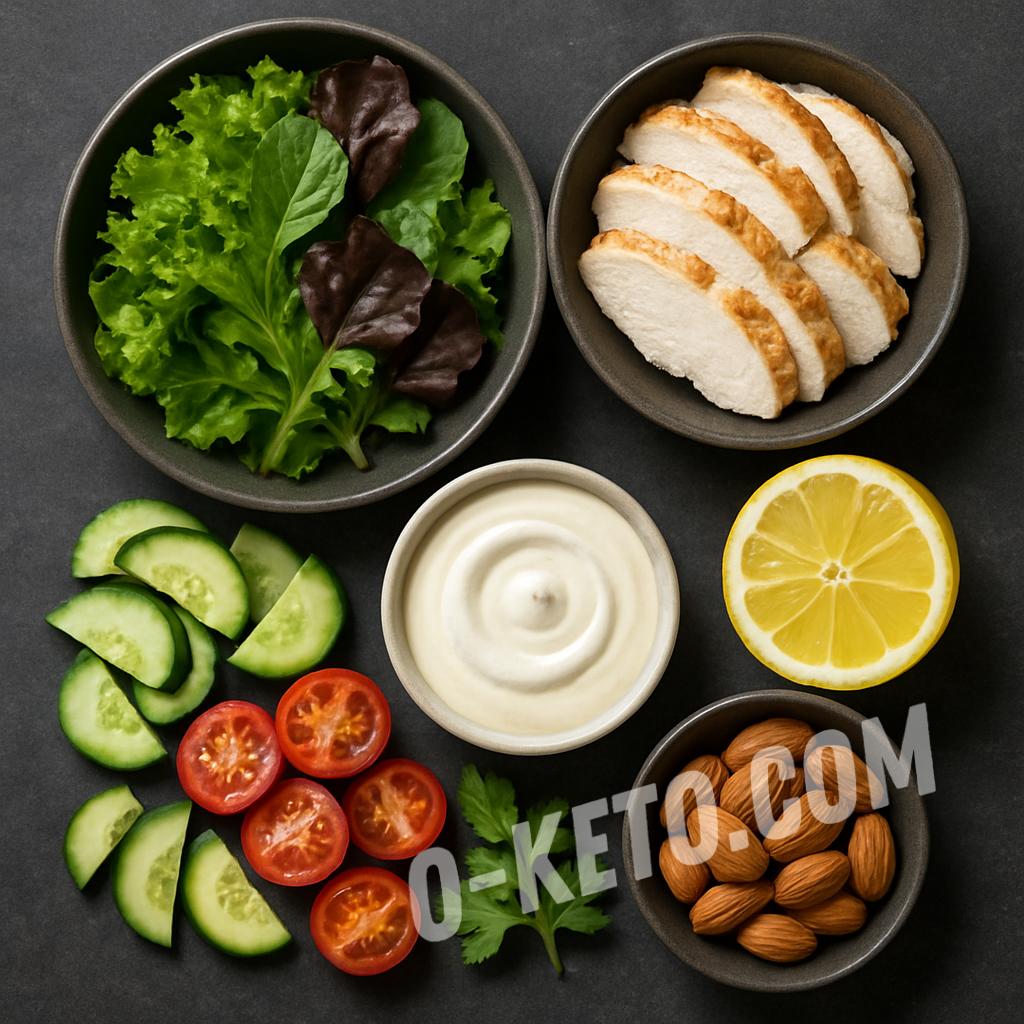
Start with volume, not grams
In salads, weight can be misleading: 100 g of leaves, 100 g of carrot, and 100 g of cheese take up very different space and feel different in the mouth. It is easier to think first in volumes and ratios, then use grams for recording the recipe and calculating nutrition.
- for a light salad, the base is usually leaves, cucumber, zucchini, cabbage, or another bulky low-carb ingredient;
- the protein should be visible and intentional, not lost in the bowl;
- fatty ingredients such as avocado, cheese, mayonnaise, cream sauce, or oil should support flavor, not turn the salad into a heavy paste;
- uniform small cuts make a salad more blended; larger pieces make individual flavors clearer.
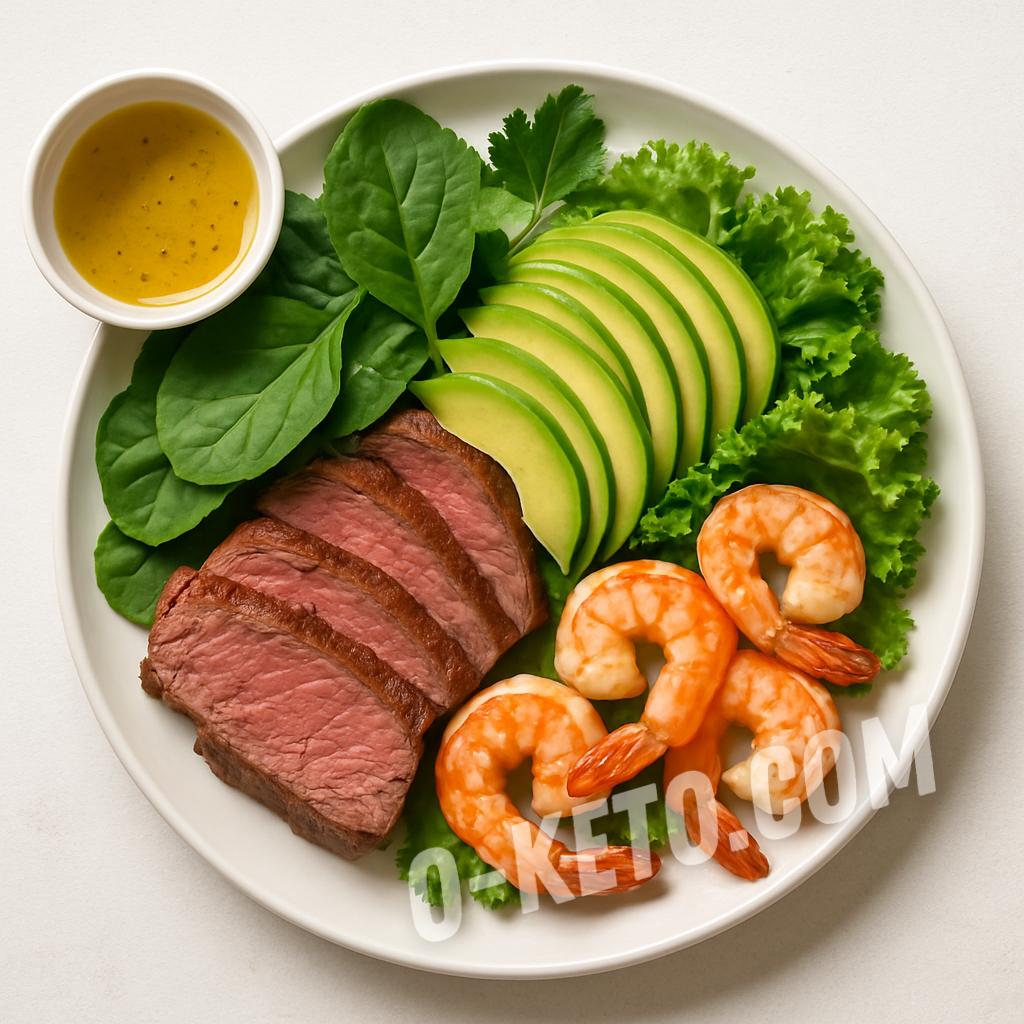
A simple practical rule: first assemble a plate that looks balanced. If one ingredient visually dominates the bowl, it will usually dominate the taste too.
Protein turns salad into a meal
On keto, a salad often has to provide real satiety, not just freshness. That means it needs a clear protein center: fish, seafood, meat, poultry, eggs, liver, tongue, or cheese.
- shrimp, mussels, and squid provide light protein, iodine, and selenium, and pair well with lemon, garlic, herbs, and cream sauces;
- beef, tongue, and liver make a salad denser, so they need acidity, pickled vegetables, herbs, or a crunchy fresh component;
- chicken absorbs marinades and spices well, but without sauce it can quickly taste dry;
- fish and avocado work well together when there is a salty, acidic, or smoky accent.
Do not hide the protein in too much mayonnaise. The sauce should bind the salad, not erase the taste of fish, meat, or seafood.
Dressing should touch the leaves first
If the salad contains many leaves or greens, mix the dressing into them before final assembly. The greens become juicy and flavorful instead of remaining a dry base under meat or shrimp.
- oil-based dressing works well with arugula, romaine, iceberg, spinach, and mixed leaves;
- mayonnaise with soy sauce suits tuna, shrimp, and other seafood because it adds umami and makes the flavor less flat;
- a warm cream sauce can be poured into an assembled salad if it is meant to provide both warmth and juiciness;
- lemon, balsamic vinegar, or other acid is useful as a counterweight to fat, smoke, sweet vegetables, or dense protein.
The common mistake is pouring dressing over a tall finished pile. Some leaves stay dry, some vegetables drown in sauce, and the flavor becomes uneven.
Warm salads need the hot step last
A warm salad works only when the warm element reaches the plate warm. Prepare the leaves, vegetables, and dressing first, then sear, heat, or sauce the hot component at the very end.
- shrimp and squid need only brief searing or heating;
- mussels are usually sold cooked, so they are thawed, dried, and quickly warmed with oil and spices;
- a hot cream sauce can replace separate reheating if the salad is already assembled;
- warm salads are inconvenient for a large party, but excellent for 2-4 people.
The key for seafood is removing excess moisture before the pan. Wet shrimp steam instead of searing, and the texture becomes watery.
Offal is better seared than boiled
Liver, hearts, and other offal are easy to ruin with too much water and prolonged heat. In salads, they taste better when cut and quickly seared, then combined with vegetables and sauce.
- liver becomes tough when overcooked or stewed too long;
- hearts should be cut into smaller pieces so they cook quickly and do not become rubbery;
- after searing, offal can be drained if you want less oil;
- walnut, cream, mustard, or mayonnaise-based sauces soften liver flavor and make the salad more coherent.
Offal has strong flavor and high nutrient density: iron, B12, choline, copper, vitamin A. It does not need dozens of ingredients, only fresh or acidic support and careful heat.
Flavor balance matters more than random substitution
Many familiar salads work not because of one specific potato, apple, or pea, but because of the combination of acidic, salty, soft, crunchy, and slightly sweet notes. On keto, this is useful: you can preserve the logic of the dish without bringing in the high-carb base.
- acid can come from pickled cucumbers, mushrooms, vinegar, lemon, balsamic, or fermented vegetables;
- salt and umami can come from cheese, sugar-free soy sauce, fish, seafood, olives, or capers;
- softness can come from avocado, eggs, cream sauces, mayonnaise, sour cream, or cream cheese;
- crunch can come from cucumber, cabbage, radish, daikon, iceberg lettuce, nuts, or seeds.
If a salad tastes flat, do not immediately add more mayonnaise. More often it lacks acid, salt, crunch, or a small bright accent.
A quick final check
Before serving, evaluate the salad by function rather than by name. This short check helps avoid overload and dryness, especially when you are building a recipe without exact instructions.
- is there protein for satiety;
- is there a juicy base, not only fatty and dense ingredients;
- is there acid or a salty accent to balance fat;
- are there different textures: soft, crunchy, dense, tender;
- is it clear which ingredient is the main one and which only support the flavor.
A good keto salad does not have to be complicated. It should be intentional: protein for satiety, a low-carb base for volume, fat for flavor, acidity for balance, and texture so every bite is not the same.
How to Adjust Dressing and Pack a Salad
The flavor of a salad often depends less on the ingredient list and more on the balance of the dressing. Oil brings softness and fat, vinegar or lemon juice adds freshness, salt opens up the vegetables and protein, and a small sweet note from erythritol, allulose, or half an apple smooths the sharpness of acid and mustard. Taste the dressing separately: if it feels flat, it usually needs salt or acidity rather than another spoonful of oil.
Vinegars are often interchangeable in salads: apple cider, wine, and balsamic vinegar give different nuances but serve a similar purpose. If there is no vinegar, use lemon juice and add it gradually. Mild Dijon or whole-grain mustard without sugar works especially well because it helps bind the oil with the acidic part and makes the sauce thicker.
Sour cream and Greek yogurt can replace each other in many dressings. Sour cream makes the taste softer and richer, while yogurt makes it lighter and tangier. Feta, brined cheese, and goat cheese can also be swapped by taste, but salty cheeses require caution with extra salt.
If you need to take a salad with you, pack the wet and fragile parts separately: sliced fruit, juicy tomatoes, cucumbers, crunchy nuts, cheese balls, and liquid dressing. Eggs are better peeled and cut closer to serving if the salad will sit in a container for a long time. Hot components such as meat or mushrooms are easier to keep separate and mix in after reheating.
Sources
- Dietary Guidelines for Americans, 2020–2025 — U.S. Department of Agriculture and U.S. Department of Health and Human Services
- FoodData Central — U.S. Department of Agriculture Agricultural Research Service
- Protein and amino acids — Dietary Reference Intakes
- Selecting and Serving Fresh and Frozen Seafood Safely — U.S. Food and Drug Administration
- Dietary Fats and Cardiovascular Disease: A Presidential Advisory from the American Heart Association