


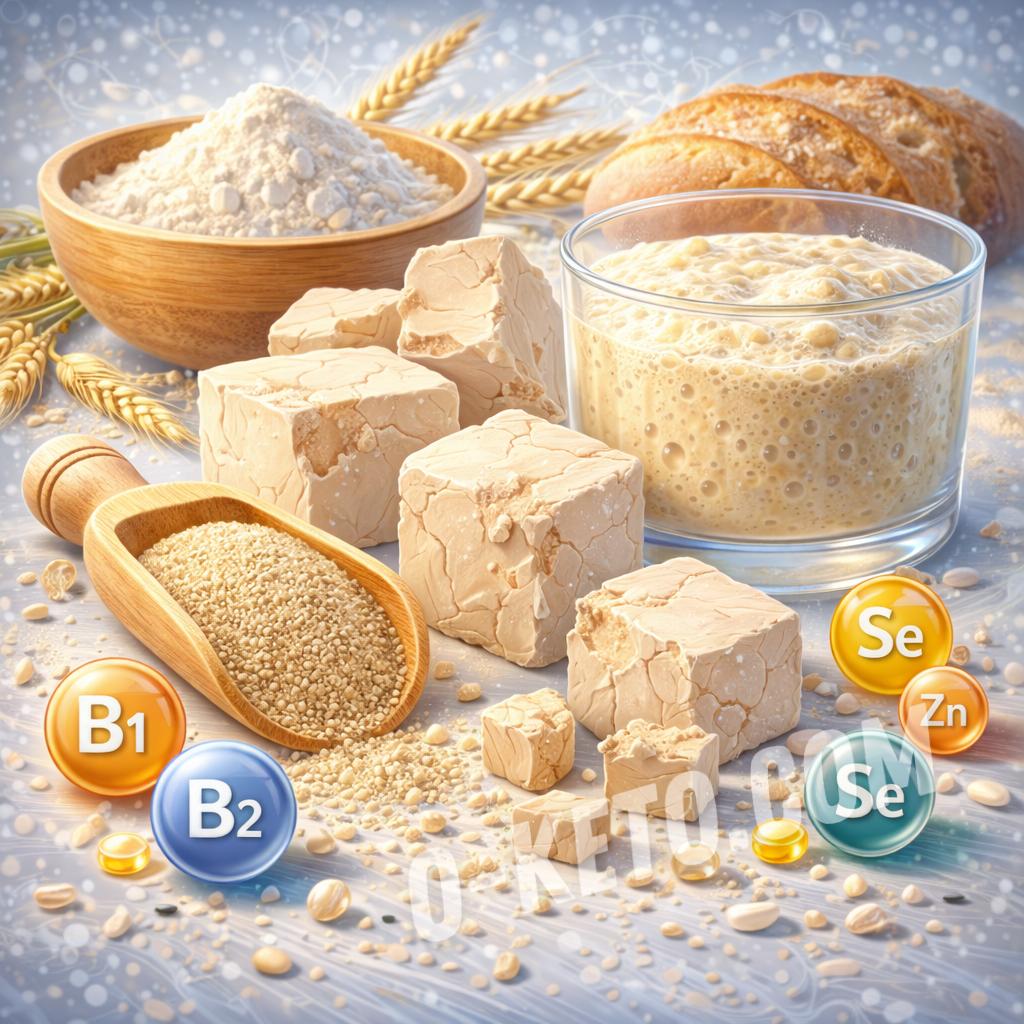

Baker’s yeast — is a unicellular microorganism belonging to fungi, which is primarily used in cooking for fermentation of dough. Its main function is to process sugars, producing carbon dioxide, which makes the dough porous, airy, and gives it a characteristic structure.
In addition to its technological role, baker’s yeast is also of interest from a nutritional perspective, as it contains a number of biologically active substances.
History and Origin
The use of yeast in bread making dates back thousands of years. The first forms of spontaneous fermentation were used in Ancient Egypt, where the dough rose due to natural microorganisms present in the air and on the grain. Over time, people learned to preserve sourdough and control the fermentation process.
Modern baker’s yeast is mainly represented by the strain Saccharomyces cerevisiae. Its industrial production began in the 19th century, which allowed for the standardization of baking and made the results more predictable.
Today, yeast is available in pressed, dry, and instant forms.
Nutritional Value
Baker’s yeast is characterized by a high concentration of protein and micronutrients. In its dry form, it contains a significant amount of amino acids, including essential ones, as well as a number of vitamins and minerals.
Main characteristics:
- high protein content;
- B vitamins;
- absence of fats;
- small amount of carbohydrates.
Yeast is not consumed in large quantities as a standalone product, but even small doses in dishes contribute to the overall intake of micronutrients.
Vitamins and Minerals
Baker’s yeast is a natural source of B vitamins, which are involved in energy metabolism and the functioning of the nervous system:
- thiamine;
- riboflavin;
- niacin;
- folates;
- pyridoxine.
It also contains trace elements:
These substances are involved in antioxidant protection, regulation of carbohydrate metabolism, and support of immune function.
Physiological Effects
When consumed as part of prepared dishes, baker’s yeast can:
- help maintain microbial balance in the gut;
- indirectly support energy metabolism;
- contribute to the body’s supply of B vitamins.
It should be noted that heat treatment and fermentation change the activity of yeast, so their effect differs from that of food or inactive yeast used as supplements.
Culinary Uses
The main use of baker’s yeast is in the preparation of bread, rolls, pizza, and other baked goods. They are also used:
- in dough for savory baked goods;
- in fermented beverages;
- in sourdoughs and starters.
Yeast affects not only the rise of the dough but also the taste, aroma, and texture of the finished product.
Baker’s Yeast and the Keto Diet
Baker’s yeast is not a keto product in the classical sense, as it is used in recipes containing carbohydrates. However, in small amounts, it can be used in low-carb baking based on alternative flours.
It is important to consider:
- yeast contains a small amount of carbohydrates;
- it is used in minimal doses;
- the main carbohydrate load is determined by the base ingredients of the dough.
Features and Precautions
Some individuals may have a sensitivity to yeast, manifesting as bloating or discomfort in the gastrointestinal tract. In such cases, the amount of yeast-containing products in the diet should be limited.
Overall, baker’s yeast is a functional culinary ingredient with additional nutrient value that, when consumed in moderation, can fit into a diverse and balanced diet.


