


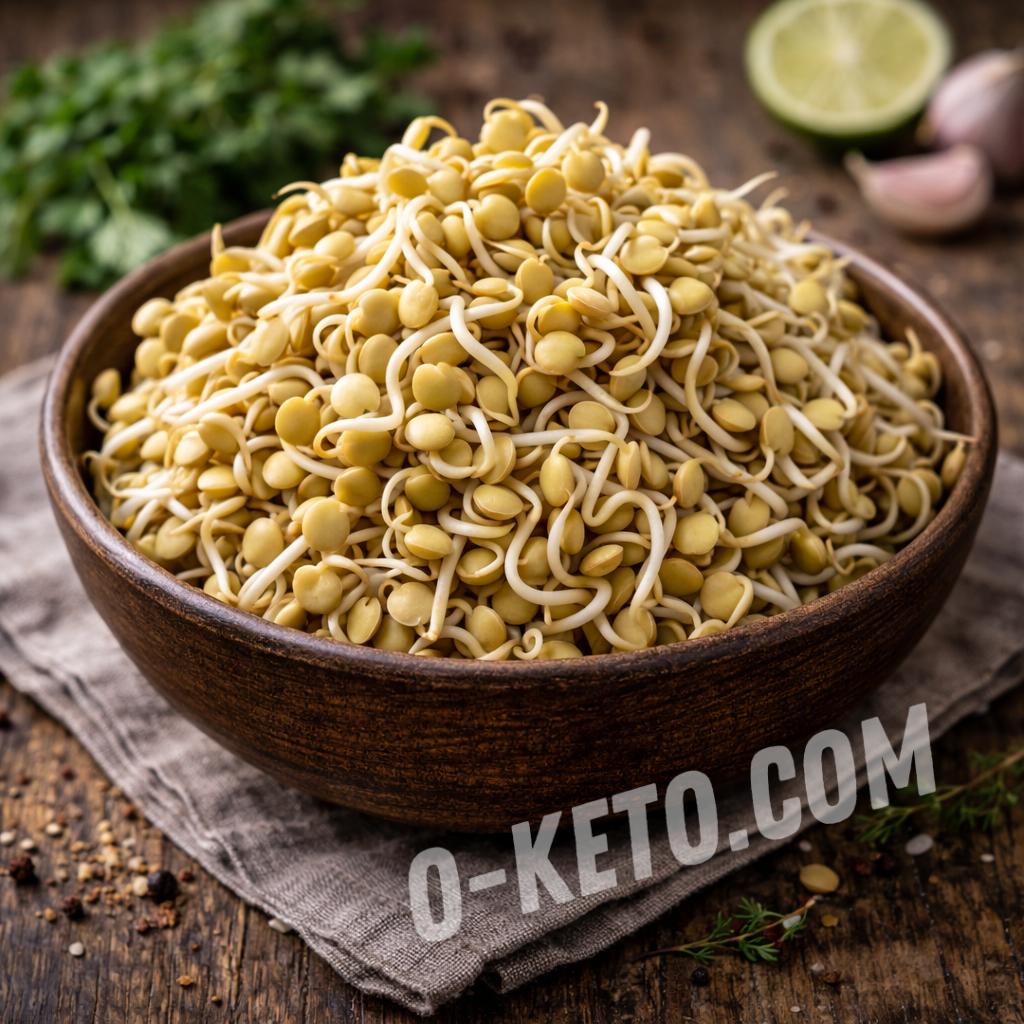

Lentil sprouts — are germinated lentil seeds that are widely used in healthy eating due to their high concentration of nutrients. During the sprouting process, enzymes are activated in the seed, the content of antinutrients decreases, and the bioavailability of many vitamins and minerals increases. As a result, the sprouts become easier to digest and absorb compared to dry lentils.
The sprouts have a mild nutty flavor and a tender crunchy texture. They are often added to salads, cold appetizers, soups, vegetable dishes, and various Asian recipes. Due to their high nutrient density, even a small amount of sprouts can significantly enrich the diet.
Nutritional Value of Lentil Sprouts
Sprouting significantly changes the composition of lentils. During growth, some starch is used for the development of the plant, while the content of vitamins and enzymes increases. However, the main carbohydrate structure of the legume is preserved.
The average nutritional value of lentil sprouts per 100 g:
- calories: about 90 kcal
- proteins: 8–9 g
- fats: 0.5 g
- carbohydrates: 15–17 g
- fiber: 2–3 g
Lentil sprouts contain B vitamins, vitamin C, iron, magnesium, potassium, and phosphorus. They also contain polyphenols and other antioxidant compounds.
Health Benefits of Lentil Sprouts
Lentil sprouts are valued primarily for their high concentration of trace elements and plant protein. Regular consumption can have several positive effects on the body.
Source of plant protein. Lentil sprouts contain a significant amount of protein for a plant product. Protein is essential for maintaining muscle mass, synthesizing enzymes and hormones, as well as tissue repair.
Support for digestion. During sprouting, the content of phytic acid and enzyme inhibitors decreases. As a result, the sprouts are digested more easily than dry legumes. Fiber additionally supports bowel function.
Antioxidant protection. The sprouts contain various antioxidants, including polyphenols and vitamin C. These substances help reduce oxidative stress and protect cells from damage.
Mineral support. Lentil sprouts are a source of iron, magnesium, and potassium. These minerals are involved in the functioning of the nervous system, muscles, and energy metabolism.
Lentil Sprouts on a Keto Diet
Despite their high nutritional value, lentil sprouts cannot be considered suitable for a strict keto diet. The main reason is their relatively high carbohydrate content.
On average, 100 g of lentil sprouts contains about 15–17 g of carbohydrates. Even accounting for fiber, the amount of net carbohydrates usually amounts to about 12–14 g.
For ketogenic diets, where daily carbohydrate intake is typically limited to 20–30 g, this is too high:
- on strict keto, lentil sprouts are usually excluded;
- on moderate low-carb, they are sometimes used in very small portions.
A low glycemic index does not make the product low in carbohydrates. Therefore, for a ketogenic diet, it is better to choose lower-carb vegetables and sprouts.
How to Consume Lentil Sprouts
Lentil sprouts are most often used fresh to retain the maximum amount of vitamins and enzymes. They can be added to various dishes:
- in vegetable salads;
- in soups and broths;
- in Asian stir-fry dishes;
- in cold appetizers;
- in vegetable rolls and sandwiches.
Sometimes the sprouts are lightly sautéed or added to hot dishes at the very end of cooking to preserve their texture.
How to Sprout Lentils at Home
Lentil sprouts are easy to prepare at home. No special equipment is required.
- Rinse the lentils and soak them in water for 8–10 hours.
- Drain the water and rinse the seeds.
- Place the lentils in a jar or container with air access.
- Rinse the seeds twice a day.
- In 2–3 days, small sprouts will appear.
Ready sprouts can be stored in the refrigerator for 2–3 days.
Conclusion
Lentil sprouts are a nutritious and beneficial product rich in protein, vitamins, and minerals. They are well-suited for a balanced diet and plant-based eating. However, due to their relatively high carbohydrate content, this product is not suitable for a strict ketogenic diet and can only be used in moderate amounts within a more lenient low-carb diet.


