


Sleep disorders
Problems falling asleep, night awakenings and shallow sleep affect not only morning alertness, but also appetite, mood and metabolism. When it comes to sleep problems, it's important to look for the cause and not settle for random short-term solutions.



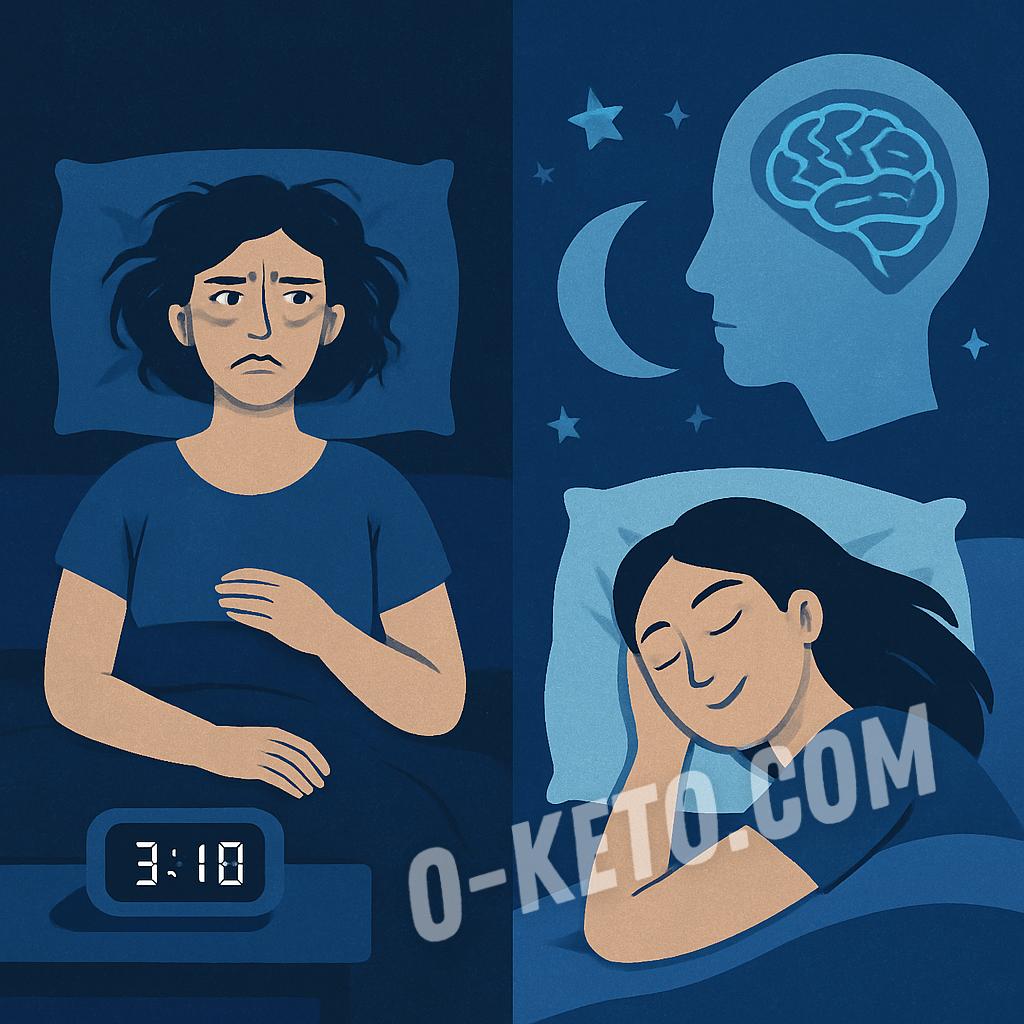
Sleep disorders are a wide range of conditions in which sleep onset, sleep depth, sleep duration, quality of recovery or daytime alertness are affected. For some people, the problem looks like difficulty falling asleep, for others it looks like frequent awakenings at night, waking up too early, shallow restless sleep, or the feeling that even after enough hours the body has not recovered. Such conditions affect not only how you feel in the morning, but also your appetite, concentration, stress tolerance, pain sensitivity, mood and metabolism.
Sleep rarely breaks “on its own.” It is affected by stress, circadian rhythm, lighting in the evening, caffeine, alcohol, pain, anxiety, depression, lack of movement, sleep apnea, blood sugar spikes, late eating, medications and the general state of the nervous system. This is why a sleepless night sometimes turns out not to be an isolated problem, but the tip of a larger recovery disorder.
How sleep phases are organized
Sleep consists of repeating cycles of NREM and REM sleep. One cycle usually lasts about 80–100 minutes, and adults generally have around four to six cycles per night. Deep NREM sleep is more prominent in the first half of the night, while the proportion of REM sleep increases toward morning.
Deep NREM sleep is associated with physical restoration, reduced activity of several body systems, and recovery of energy. During REM sleep, the brain remains active, vivid dreams are more common, and information and memory processing continues. Both phases matter, so chronic sleep restriction cannot reliably be corrected by trying to “make up” only one stage.
What options are most common?
Most often, people complain of difficulty falling asleep, early awakenings, inability to fall back to sleep after waking up in the night, or the feeling that sleep was too light and did not provide rest. For some people, daytime sleepiness is combined with poor sleep at night, for some, on the contrary, there is fatigue, but the nervous system is so tense that it does not allow you to fall into deep rest. Sometimes this is accompanied by irritability, anxiety, cravings for sweets, memory impairment and decreased motivation.
It is useful to distinguish a temporary disruption after a flight, illness or a few stressful days from a repeating pattern. If difficulties with sleep return again and again, this is a reason to deal with the cause, and not look for endless random life hacks.
What most often interferes with sleep
Some of the most common factors are late bright light, anxiety in the evening, excess stimulants, irregular schedule, working late into the night, late heavy meals and the habit of spending the last hours of the day in a state of information overload. In some people, pain, nocturnal hypoglycemia, hormonal fluctuations, sleep apnea, hyperthyroidism, depression, or medication side effects play a significant role.
Therefore, sleep does not always improve with just one supplement. If the basic regime is destroyed, and the nervous system lives in constant mobilization, any supporting means work weaker. In such cases, it is not just one magical tool that is important, but the restoration of the general circuit of rest.
When is a medical evaluation needed?
You should see a doctor if your sleep disorder lasts for weeks, affects your ability to work, increases anxiety or depressive thoughts, is accompanied by loud snoring, pauses in breathing, severe daytime sleepiness, palpitations at night, pain, unusual sleep behavior, or a constant need to reach for caffeine. The situation requires special attention when the problem began abruptly, grows rapidly, or is combined with a noticeable deterioration in general health.
A physician’s evaluation can help differentiate conditional insomnia from anxiety disorder, apnea, restless leg syndrome, depression, hormonal causes, and other conditions that require different solutions. This is important because the same complaint “I don’t sleep well” can hide completely different mechanisms.
As usual we approach support
Sleep support usually starts with a routine: a more consistent wake-up time, reduced light and stimulation in the evening, limiting excess caffeine and alcohol, reducing pre-bedtime overwhelm, and a more predictable daily rhythm. For some people, the key is treatment of anxiety or depression, for others, correction of pain, apnea or metabolic factors. Supplements are sometimes used if they are appropriate for a particular situation.
Inositol is sometimes considered as one of the supportive nutritional measures, especially if there is a combination of sleep disorders with anxiety and internal tension. But even in such cases, it should not replace the assessment of causes if the person has not recovered at night for months or has signs of a more serious sleep disorder.
Why sleep is important for metabolism and psyche
Insufficient and poor sleep affects not only your mood. It increases cravings for higher-calorie foods, worsens appetite control, makes the nervous system more sensitive to stress, and can increase insulin resistance. If you already have anxiety or depression, sleep problems often become a factor that perpetuates the entire cycle of worsening well-being.
That is why working with sleep often has a noticeable effect not only on the level of fatigue, but also on mood, concentration, nutrition control and exercise tolerance. Sleep is not a minor luxury, but one of the main recovery systems.
Short sleep and daytime safety
Even a few nights of shortened sleep can noticeably impair attention, reaction speed, memory, and decision-making. This is why marked sleepiness is not only a productivity problem: a person who is nodding off while driving or operating equipment should not try to compensate with caffeine alone.
For most adults, the usual reference point is at least 7 hours of sleep per 24 hours, but regularity and recovery also matter. When short sleep continues for weeks, it may be accompanied by poorer appetite control, altered insulin responses, and greater cardiovascular strain. These are population-level associations and physiological effects of sleep loss, not a diagnosis based on one short night.
Loud snoring, pauses or interruptions in breathing during sleep, morning headaches, and severe daytime sleepiness require separate assessment because sleep apnea may be involved. In that situation, simply spending more time in bed does not remove the cause without evaluating and treating the breathing disorder.
Practical conclusion
Sleep disorders require respectful treatment because they almost always affect other body systems. The sooner it becomes clear that a problem is recurring and interfering with recovery, the more useful it is to move from random advice to meaningful diagnosis of the causes and more sustainable tactics of help.
Even if the starting complaint seems to be only difficulty falling asleep, it is important to look more broadly: what happens to stress, routine, anxiety, nutrition, breathing during sleep and the general resource of the nervous system. This approach usually works better than trying to find a single quick fix for all cases of poor sleep.
Sources
- Sleep Deprivation and Deficiency: How Sleep Affects Your Health — National Heart, Lung, and Blood Institute;
- Short Sleep Duration and Sleep Difficulties Among Adults: United States, 2024 — National Center for Health Statistics;
- How does inadequate sleep affect health? — National Institute of Child Health and Human Development.
- What happens during sleep? — National Institute of Child Health and Human Development;
- How Sleep Works: Sleep Phases and Stages — National Heart, Lung, and Blood Institute.
If you have any questions about the term "Sleep disorders", you can ask them to AI. Please note, a low-cost OpenAI model is used. It may answer questions about disease treatment with errors!


 1 / 4
1 / 4


 1 / 4
1 / 4 1 / 4
1 / 4


