


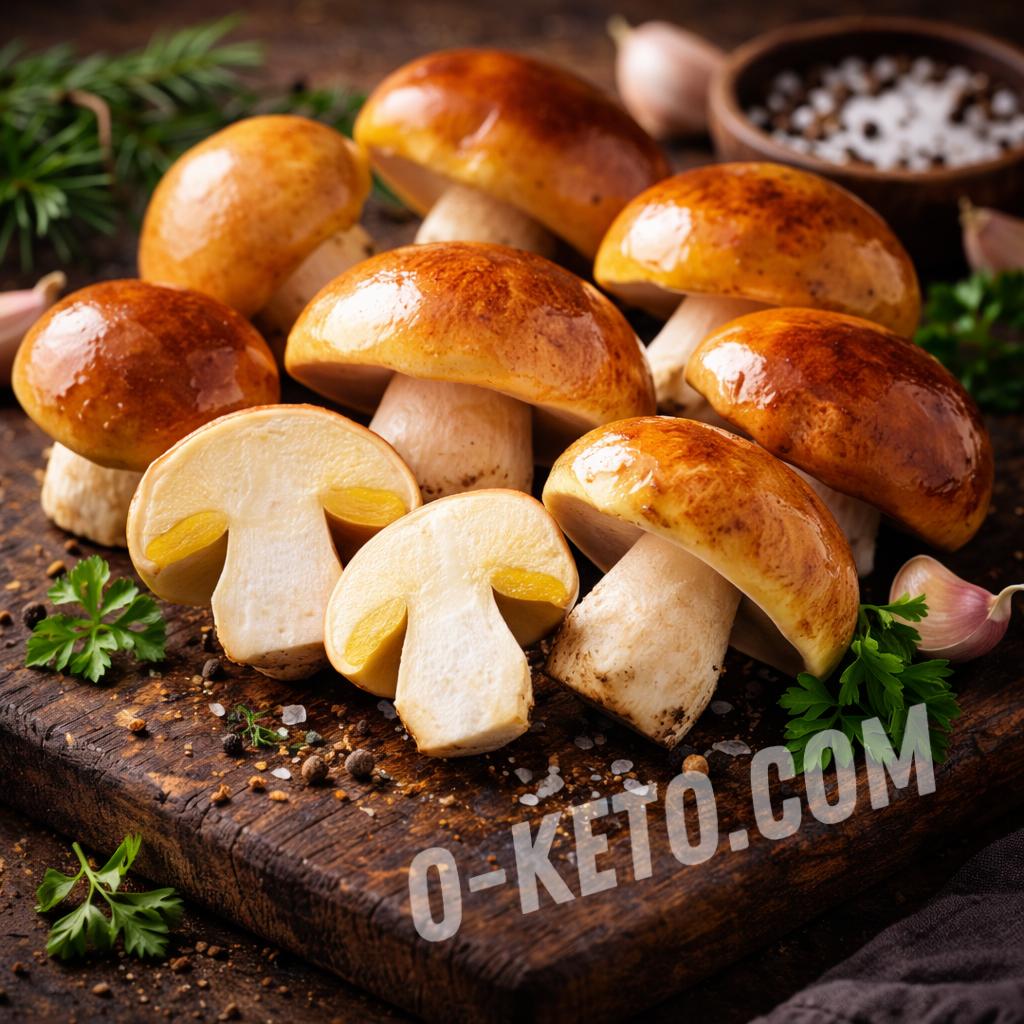

Butter mushrooms — edible fungi from the genus Suillus, widely distributed in coniferous forests of the temperate climate. They are easily recognized by their smooth, slightly slimy cap, which becomes shiny and oily after rain.
Due to their pleasant taste and soft texture, butter mushrooms are considered popular edible fungi and are often used in home cooking.
Butter mushrooms form mycorrhiza with coniferous trees, most often with pine, so they are usually found in pine and mixed forests. They grow in groups and can appear in large clusters after rain. Young mushrooms are especially valued in cooking for their firm flesh and delicate aroma.
History and Features
Butter mushrooms are traditionally harvested in Eastern European countries, Russia, and Northern Asia. These fungi have long been used in home cooking due to their availability and good taste qualities. They are fried, stewed, dried, and pickled, and also added to soups and vegetable dishes.
Main characteristic features of butter mushrooms:
- smooth or slightly slimy cap;
- yellowish-brown or dark brown color;
- spongy layer under the cap instead of gills;
- soft light flesh.
Before cooking, many chefs remove the upper skin of the cap, as it can be slimy and slightly bitter when cooked.
Nutritional Value
Like most mushrooms, butter mushrooms are low in calories and contain a small amount of fat. The main part of their mass is water, but they also contain protein, fiber, and various trace elements.
The average nutritional value per 100 g of fresh mushrooms:
| calories | 20–25 kcal |
| proteins | 2–3 g |
| fats | 0.3 g |
| carbohydrates | 3–4 g |
Butter mushrooms contain a number of vitamins and minerals:
- B vitamins;
- selenium;
- potassium;
- phosphorus;
- magnesium.
The glycemic index of mushrooms is very low, so they have virtually no effect on blood sugar levels.
Culinary Uses
Butter mushrooms are suitable for various cooking methods and pair well with many ingredients. Their soft texture makes them a versatile ingredient for various dishes.
Main cooking methods:
- pan-frying;
- stewing;
- adding to soups;
- baking;
- pickling.
Before cooking, the mushrooms are cleaned of dirt and, if necessary, the slimy skin is removed from the cap. After that, they can be chopped and used in dishes.
Butter mushrooms pair well with the following ingredients:
Storage
Fresh butter mushrooms should ideally be used within a few days after harvesting. For short-term storage, they are kept in the refrigerator in a paper bag or an open container.
For long-term storage, several methods are used:
- freezing;
- drying;
- pickling;
- canning.
Proper processing and storage help preserve the taste and aroma of the mushrooms for a long time.


