


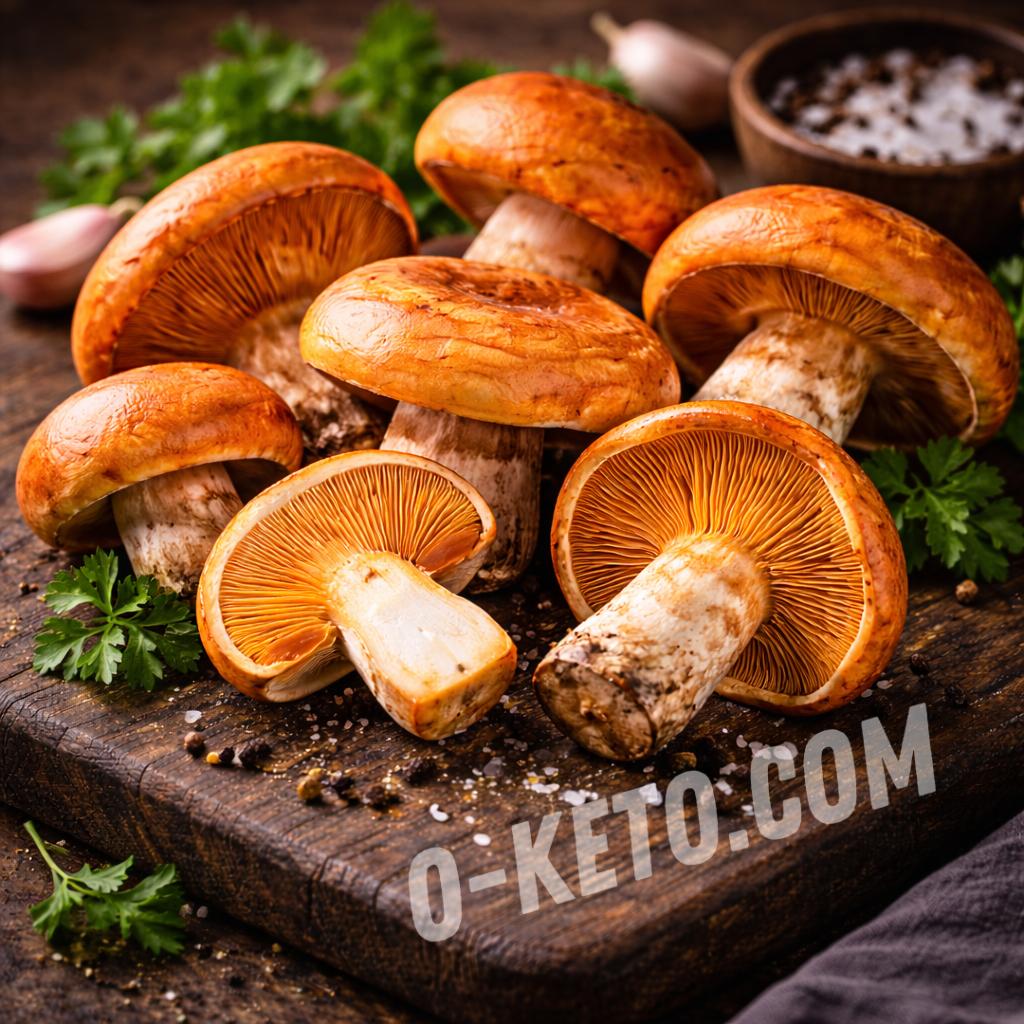

Chanterelles — edible mushrooms from the genus Lactarius, valued for their bright color, rich aroma, and firm flesh. They got their name due to their characteristic orange or reddish cap color. These mushrooms are widely distributed in coniferous and mixed forests and are considered some of the most delicious forest mushrooms.
Chanterelles form mycorrhiza with coniferous trees, most often with pine or spruce. They usually appear in late summer and autumn. Young fruiting bodies have a particularly pronounced aroma and firm texture, which is why they are widely used in cooking.
Description and Species
Chanterelles have distinctive features that make them easy to distinguish from other mushrooms. The cap is usually funnel-shaped or slightly depressed in the center, with concentric rings on the surface.
- cap diameter 5–12 cm;
- color from bright orange to reddish-orange;
- gills under the cap are orange;
- the stem is firm and cylindrical;
- when damaged, it releases orange milky juice.
The most well-known species:
- true chanterelle;
- pine chanterelle;
- spruce chanterelle.
The flesh of chanterelles is firm and aromatic, and during cooking, it may slightly darken or acquire a greenish tint — this is a natural property of these mushrooms.
Nutritional Value
Chanterelles are low-calorie products and contain a small amount of fat. They are a source of protein, fiber, and various trace elements.
| calories | 20–25 kcal |
| proteins | 2–3 g |
| fats | 0.5 g |
| carbohydrates | 3–4 g |
Chanterelles contain important vitamins and minerals:
- B vitamins;
- vitamin D;
- potassium;
- phosphorus;
- magnesium;
- selenium.
The glycemic index of mushrooms is very low, so they have little effect on blood sugar levels.
Culinary Uses
Chanterelles have a rich mushroom flavor and are well-suited for various cooking methods. They can be used as a main ingredient in a dish or as a flavorful addition.
Main cooking methods:
- frying in a pan;
- stewing;
- adding to soups;
- baking;
- salting;
- pickling.
Before cooking, the mushrooms are cleaned of dirt and rinsed if necessary. Young chanterelles are often cooked whole or cut into large slices.
Chanterelles pair well with the following products:
Storage
Fresh chanterelles should ideally be used within a few days after harvesting. They are stored in the refrigerator in a paper bag or an open container.
For long-term storage, several methods are used:
- freezing;
- drying;
- salting;
- pickling.
These methods allow you to preserve the taste and aroma of the mushrooms and use them in various dishes throughout the year.


