


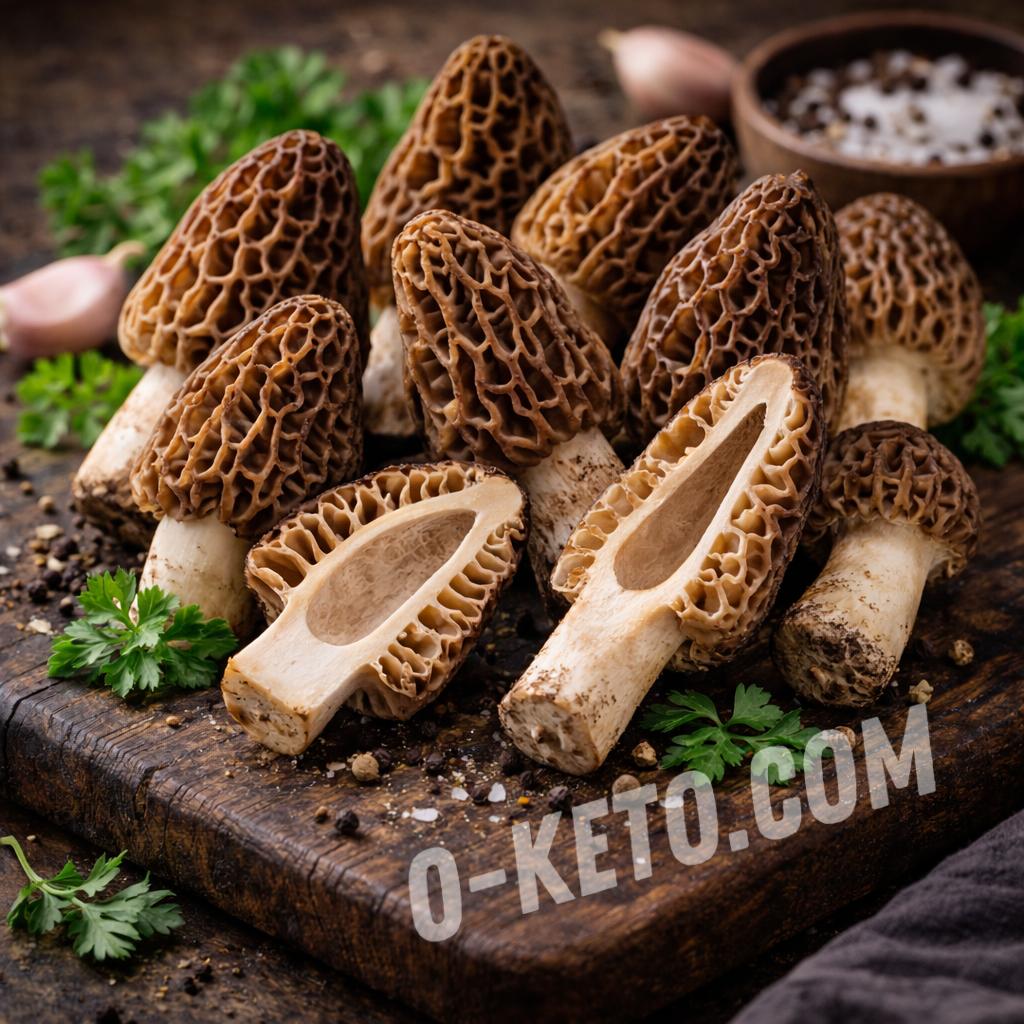

Morels — edible mushrooms from the genus Morchella, which are easily recognized by their unusual honeycomb-shaped caps. These mushrooms are considered a delicacy in many cuisines around the world due to their rich aroma and distinctive flavor. Morels appear in early spring and are among the first mushrooms of the season.
In nature, morels are found in deciduous and mixed forests, on edges, clearings, and sometimes in old burns. They prefer moist soils and often appear after the snow melts.
These mushrooms require mandatory heat treatment before consumption.
Description and Features
Morels have a characteristic morphology that makes them difficult to confuse with most other mushrooms. Their fruiting body consists of a hollow stem and a cap with a pronounced honeycomb structure:
- the cap is elongated and honeycombed;
- color ranges from light brown to dark brown;
- the stem is light and hollow inside;
- the entire structure of the mushroom is completely hollow;
- the flesh is thin and fragile.
It is important to distinguish true morels from so-called false morels, which may contain toxic substances. A true morel is always completely hollow inside when cut.
Nutritional Value
Morels are low in calories and contain a small amount of fat. They are a source of protein, fiber, and a range of trace elements.
| calories | 30–35 kcal |
| proteins | 3–4 g |
| fats | 0.5 g |
| carbohydrates | 5–6 g |
Morels contain various vitamins and minerals:
- B vitamins;
- vitamin D;
- potassium;
- phosphorus;
- magnesium;
- iron.
The glycemic index of mushrooms is very low, so they have little effect on blood sugar levels.
Culinary Uses
Morels have a pronounced mushroom aroma and are often used in haute cuisine. They must be subjected to heat treatment before cooking.
Main cooking methods:
- sautéing;
- stewing;
- making sauces;
- adding to soups;
- baking;
- dried.
Before cooking, the mushrooms are thoroughly cleaned and washed, as sand and forest debris can accumulate in the cells of the cap.
Morels pair well with the following products:
Storage
Fresh morels should ideally be used soon after harvesting. They can be stored in the refrigerator for a few days.
For long-term storage, the following methods are used:
- drying;
- freezing;
- pre-cooking followed by freezing.
Dried morels are especially valued in cooking, as they retain their rich aroma after soaking and are suitable for making sauces and various hot dishes.


