


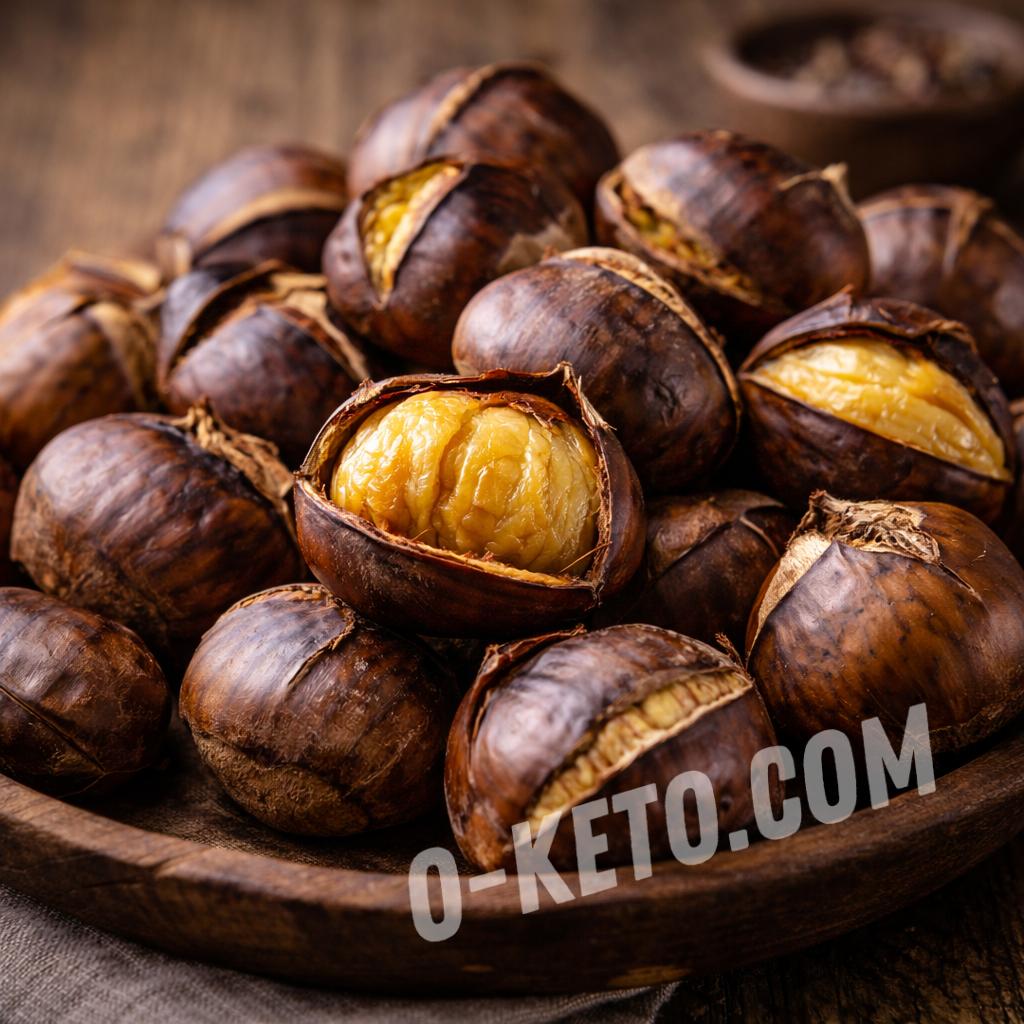

Roasted Chestnuts
Roasted chestnuts — a traditional seasonal product widely consumed in Europe, Asia, and the Caucasus. Unlike most nuts, chestnuts have a completely different nutritional profile: they contain significantly less fat but are rich in starch and other carbohydrates. After roasting or frying, chestnuts acquire a soft texture, sweet taste, and characteristic nutty aroma.
Historically, chestnuts were an important food source in many regions. In the mountainous areas of Europe, they were even made into flour and baked into bread. Today, roasted chestnuts are most often used as a seasonal snack, added to side dishes, meat dishes, or desserts.
Nutritional Value of Roasted Chestnuts
Chestnuts are significantly different from other nuts. They contain less fat but considerably more carbohydrates.
The average nutritional value of roasted chestnuts per 100 g:
Chestnuts contain B vitamins, vitamin C, potassium, magnesium, and copper. They also contain antioxidants and plant polyphenols.
Health Benefits of Chestnuts
Mineral Composition. Chestnuts contain potassium and magnesium, which are involved in the functioning of the nervous system, muscles, and cardiovascular system.
Fiber promotes normal bowel function and supports healthy gut flora.
Glycemic Index
The glycemic index of chestnuts is in the average range, around 50–60. This means that the product can moderately raise blood sugar levels.
Despite the presence of fiber, chestnuts contain a large amount of starch, so their impact on blood glucose levels is noticeable.
Roasted Chestnuts on a Keto Diet
Roasted chestnuts are not suitable for a ketogenic diet. The main reason is the very high carbohydrate content.
In 100 g of chestnuts, there are approximately 45 g of carbohydrates. Even a small portion can easily exceed the daily carbohydrate limit on a ketogenic diet:
- on strict keto, chestnuts are completely excluded;
- on moderate low-carb, they are sometimes consumed very rarely and in small portions.
To maintain ketosis, this product is not suitable. For this reason, chestnuts are more related to high-carbohydrate foods than to nuts in the traditional sense.
How to Prepare Roasted Chestnuts
Before roasting, chestnuts are usually scored to prevent the shell from bursting during heating. They are then prepared in one of the following ways:
- baked in the oven;
- fried in a dry pan;
- cooked over an open flame.
After cooking, the shell is easily removed, and the flesh becomes soft and aromatic.
Conclusion
Roasted chestnuts — a delicious and nutritious product with a rich history. They contain vitamins, minerals, and fiber; however, their main energy value comes from carbohydrates. Due to their high starch content, chestnuts are not suitable for ketogenic diets and can only be used in diets with higher carbohydrate consumption.


