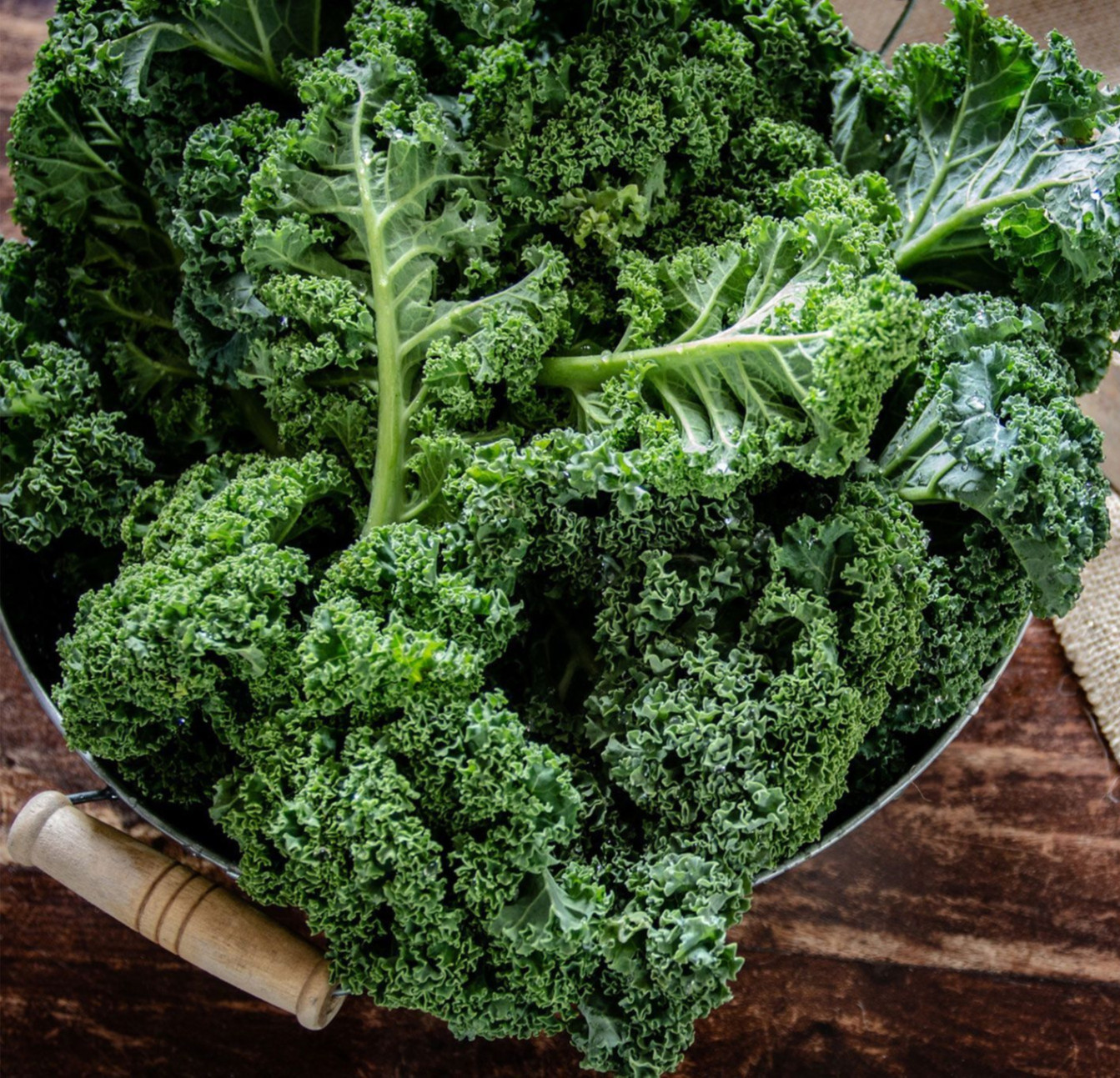

Kale, or curly cabbage, is a leafy cruciferous vegetable with dense green or purple leaves. It has more texture than lettuce and a stronger cabbage-like flavor than spinach. Kale can be eaten raw, sautéed, baked into chips, added to soups, omelets, salads and side dishes.
For keto, kale is convenient: it is low in digestible carbohydrates, high in volume and contains fiber, while its flavor works well with fatty dressings. It can make a plate more satisfying without starchy sides, but it needs proper preparation or the leaves may feel tough.
Nutrition
One cup of raw kale is about 60-70 g and usually provides around 30-35 kcal, about 3 g of protein, less than 1 g of fat and about 5-6 g of carbohydrates, some of which is fiber. Its glycemic load is low, so a normal portion fits well into low-carb eating.
Kale contains vitamins K, C and A, folate, potassium, calcium, magnesium and antioxidant compounds such as quercetin and kaempferol. These make it a useful leafy green, but not a reason to promise special effects. Its value is in the overall diet, not in miracle effects.
Is Kale Keto-Friendly?
Yes, kale fits keto and LCHF well. It can replace part of grains, potatoes or bread-based sides by adding volume and fiber. It pairs especially well with olive oil, butter, eggs, cheese, bacon, fish, chicken and avocado.
On strict keto, count the portion if you eat a lot of kale, but the bigger issue is often the dressing: sweet sauces, honey, dried fruit, breading and ready salad dressings can raise carbohydrates quickly.
How to Use It
Raw kale is best sliced thinly and massaged with salt, lemon juice or olive oil. This softens the leaves and makes them more pleasant. Tough stems are often removed or cooked longer than the leaves.
Practical options include:
- salad with olive oil, lemon, avocado and egg;
- sautéed kale with garlic and butter;
- an addition to omelet, frittata or scrambled eggs;
- kale chips with salt and sugar-free spices;
- a green base for fish, chicken or meat.
How to Choose and Store
Fresh leaves should be firm, without slimy areas, yellow spots or strong wilting. Young leaves are softer and better for salads; larger leaves are better for sautéing and baking. Store kale dry in the refrigerator in a bag or container and wash it before use.
Limitations and Substitutes
Kale is rich in vitamin K, so people taking warfarin or similar medication should keep intake consistent and discuss it with a clinician. In sensitive digestion, raw cruciferous vegetables may cause bloating; cooking and smaller portions often help.
Portion and Pairings
Kale is rarely pleasant in huge raw portions because it is dense and needs chewing. For salad, 50-80 g of leaves is enough when there is a protein base and fatty dressing. Cooked portions can be larger because the leaves shrink strongly, while fiber and satiety remain.
The best way to make kale taste good is to add fat, acidity and salt. Olive oil softens the leaves, lemon or vinegar reduces roughness, and cheese, eggs, bacon, fish or chicken make the dish complete. Without that support, kale can feel dry and grassy.
Common Mistakes
The first mistake is leaving tough stems in a salad with the leaves. They need different preparation and can spoil the texture. The second is covering kale with a sweet store-bought dressing. Then a low-carb green becomes a carrier for sugar even though the cabbage itself fits keto.
Similar keto options include spinach, chard, collard greens, arugula, romaine lettuce, Chinese cabbage and broccoli. For salad use more tender greens; for a hot side dish choose chard, spinach or leafy cabbage.
How to Soften the Leaves
Kale often feels rough because of preparation rather than flavor. For salad, remove leaves from the central stem, slice them thinly, add salt, acid and oil, then massage with your hands for 30-60 seconds. The leaves darken, shrink and become softer, so the dressing spreads more evenly.
For hot dishes, stems can be chopped smaller and started earlier than the leaves. In soups and stews, add them a few minutes before the tender leaves. This avoids wasting an edible part while keeping the texture pleasant.