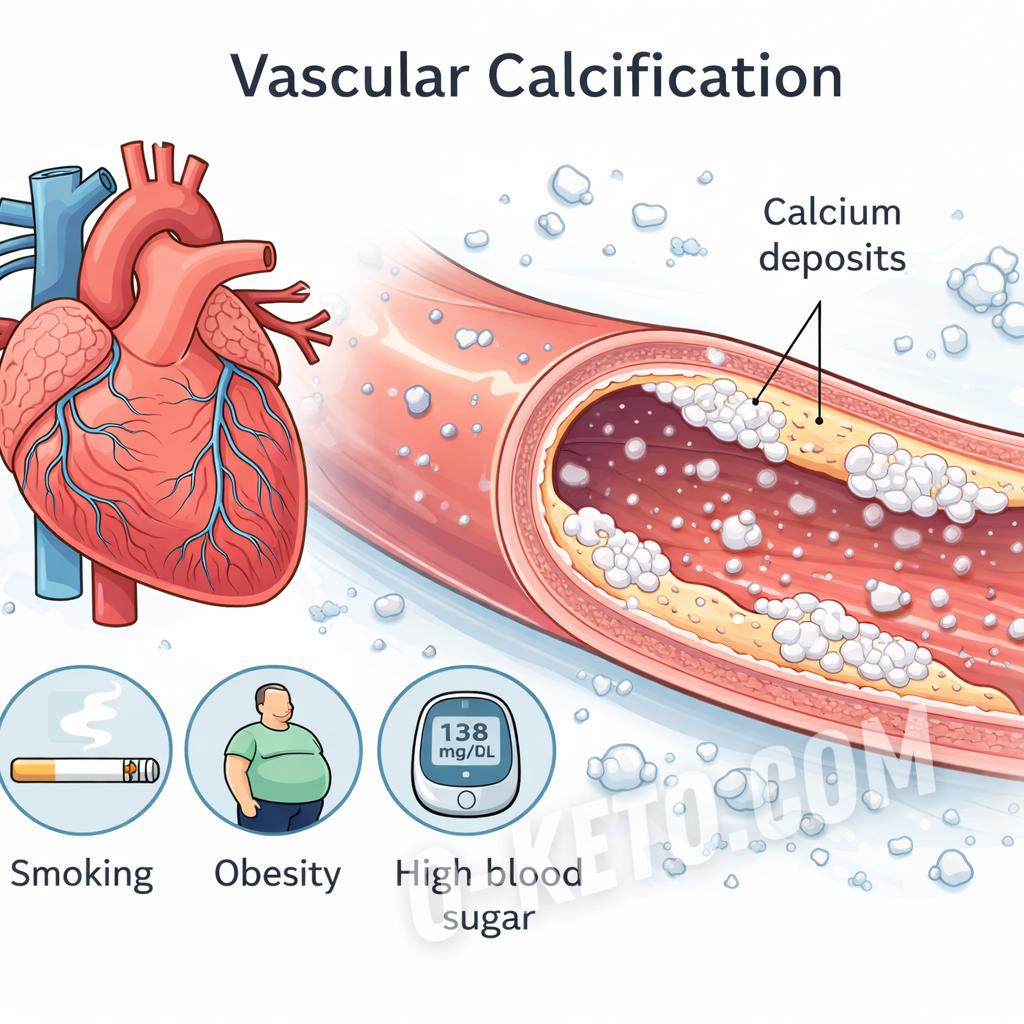
Vascular calcification is a pathological process in which calcium salts are deposited in the walls of arteries and other blood vessels. As a result, the vessels lose elasticity, become stiffer, and are less able to adapt to changes in blood flow.
This condition increases the risk of arterial hypertension, ischemic complications, and impaired blood supply to organs.
Calcification is not a consequence of excess calcium in the diet, but rather reflects a disruption in the regulation of mineral metabolism and chronic metabolic processes.
How vascular calcification forms
Normally, calcium is strictly controlled by the regulatory systems of the body and is used for bone tissue, muscle contractions, and the transmission of nerve impulses. When this regulation is disrupted, calcium begins to deposit in soft tissues, including the vascular wall.
Calcification can develop in different layers of the vessel. In atherosclerosis, calcium accumulates in the inner layer of the wall along with lipid and inflammatory components. In medial calcification, calcium is deposited in the middle layer of the wall, leading to a loss of elasticity without significant narrowing of the lumen.
Key mechanisms include chronic inflammation, insulin resistance, phosphate metabolism disorders, and deficiencies of proteins and vitamins responsible for the proper distribution of calcium.
Risk factors
age-related changes and prolonged exposure to metabolic factors;
Calcium from food alone does not cause deposits in vessels when the regulation of metabolism is preserved.
Substances that direct calcium to bone tissue and prevent its deposition in vessels are critically important. These include vitamin K2, magnesium, and vitamin D. In their deficiency, calcium can accumulate in soft tissues even with normal dietary calcium levels.
Keto diet and vascular calcification
The keto diet is not a cause of vascular calcification and does not automatically protect against it. Its influence is mediated through improved glucose control, reduced insulin resistance, and decreased systemic inflammation.
When following a ketogenic diet, it is important to avoid deficiencies of magnesium and vitamin K2, as well as to prevent excess phosphates, which often come from processed meat products.
With adequate dietary selection, the keto approach can reduce metabolic risk factors associated with calcification.
Practical steps to reduce risk
Vascular calcification is a consequence of disrupted regulation, not simply excess calcium. A knowledgeable approach to nutrition, control of metabolic factors, and support of key regulators of mineral metabolism can slow the progression of the process and reduce the risk of vascular complications.
It is recommended to:
maintain normal glucose and blood pressure levels;
ensure adequate intake of magnesium and vitamin K2;
avoid regular consumption of products with added phosphates;
maintain regular physical activity;
quit smoking;
conduct medical monitoring in the presence of risk factors.
Any remaining questions? Ask chatGPT.:
If you have any questions о термине "Vascular calcification", you can ask them to our bot.
Ask a question
List of videos from YouTube by request "Vascular calcification":
Only verified information backed by research, physiology, and biochemistry about your health.
Why diseases occur, how to heal with proper nutrition, vitamins, and minerals, what therapeutic doses to take, and which diet is optimal for your health. What tests to take and how to interpret the results.
In the settings, you can also enable knowledge based on GNM and homeopathy.
We use cookies to ensure the best presentation of our website. If you continue to use the site, we will assume that you are satisfied with it.