


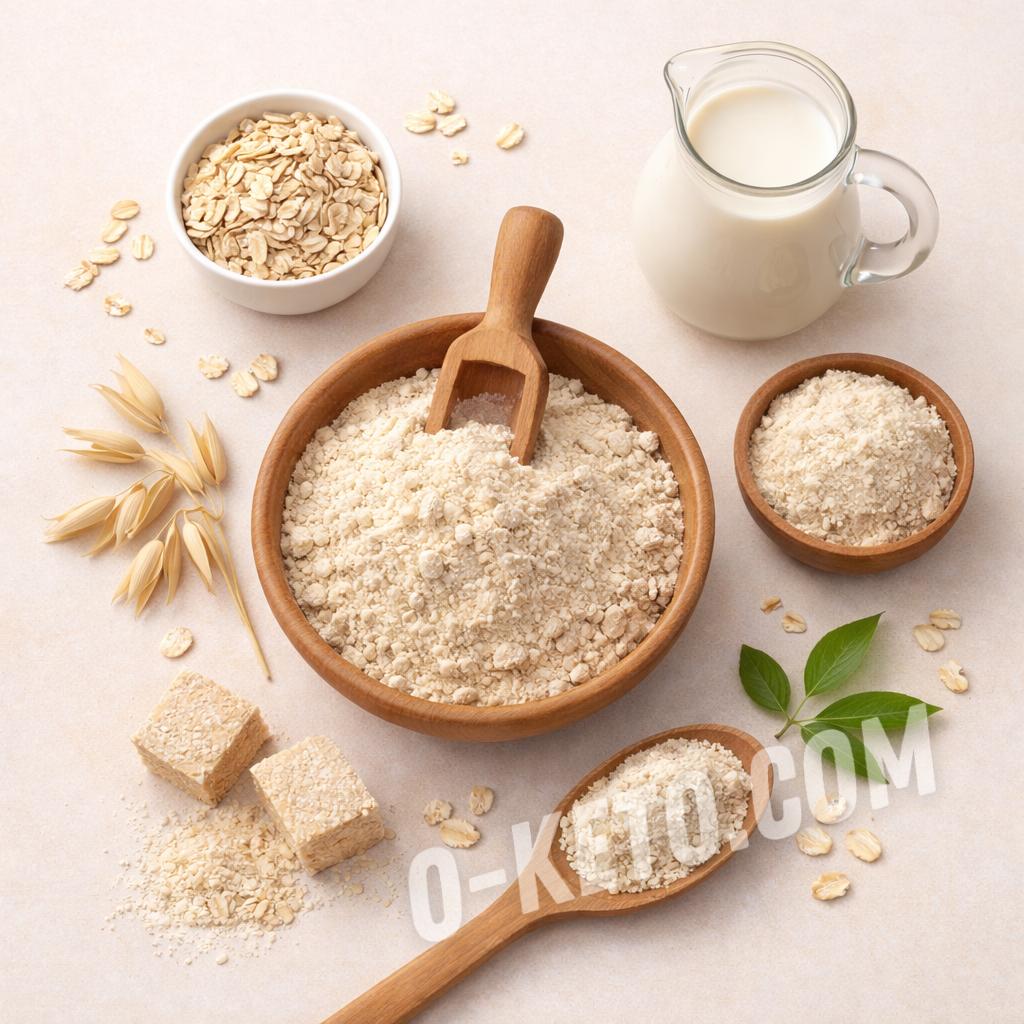

Oat flour — a product of processing whole oat grains, widely used in the diet of people focused on balanced nutrition and increasing the dietary density. Unlike refined wheat flour, it retains a significant portion of the original nutrients of oats, including dietary fibers, minerals, and bioactive compounds. This makes oat flour a functional ingredient rather than just a source of calories.
The main value of oat flour lies in beta-glucans — soluble dietary fibers that have a pronounced effect on lipid metabolism, gut microbiota, and glycemic response.
However, despite all its advantages, oat flour remains a product with a high carbohydrate content, which imposes limitations on its use in low-carbohydrate and keto-oriented dietary protocols.
History and Origin
Oats have been used in human nutrition for over four thousand years. Initially grown as a fodder crop, it was later appreciated for its resilience to climatic conditions and high nutritional value. In Northern European countries, oats have traditionally held an important place in the diet.
Oat flour is made by grinding whole grains or oat flakes. Unlike refined grains, this processing method retains the grain’s husk, which contains the majority of the fiber, minerals, and phytonutrients.
Nutritional Value
Oat flour is a source of energy and complex carbohydrates. On average, per 100 g of the product, it contains:
- calories around 380–390 kcal;
- proteins 16–17 g;
- fats 6–7 g;
- carbohydrates 65–67 g.
The protein in oats is inferior to that of legumes and animal sources in amino acid profile, but it contributes to the overall protein supply of the diet. The fat fraction is mainly composed of unsaturated fatty acids.
Oat flour contains:
- B vitamins, which are involved in energy metabolism and the functioning of the nervous system;
- magnesium and phosphorus, necessary for bone tissue and muscle function;
- iron and zinc, which are involved in blood formation and immune responses;
- soluble and insoluble fiber.
Beta-glucans are particularly significant as they can lower levels of total and LDL cholesterol and slow down glucose absorption in the intestine.
Glycemic Index and Metabolic Impact
The glycemic index of oat flour averages around 50–55, which is considered moderate. This means that the product causes a gradual increase in blood glucose levels compared to refined flour, but it cannot be considered low-glycemic.
The glycemic load depends on the portion size. Even a small amount of oat flour, when consumed regularly, can significantly increase daily carbohydrate intake, which is important for people with insulin resistance and carbohydrate metabolism disorders.
Adding fats and proteins to dishes with oat flour can partially smooth out the glycemic response, but does not completely eliminate the carbohydrate load.
Oat Flour and Low-Carbohydrate Diets
For a classic keto diet, oat flour is not suitable due to its high carbohydrate content. Even 30 g of the product can provide a significant portion of the daily carbohydrate limit.
In more flexible low-carbohydrate schemes, oat flour can be used occasionally and in small amounts, primarily as a technological additive rather than a main ingredient.
As alternatives, almond, coconut, flaxseed, or pumpkin flour are more commonly used, which provide a lower carbohydrate load and better align with the metabolic goals of keto nutrition.
Possible Limitations
Oat flour contains avenins — proteins related to gluten. Although oats are not classified as classic gluten-containing grains, some individuals with gluten sensitivity may experience reactions.
Additionally, the high carbohydrate content makes oat flour undesirable in cases of pronounced insulin resistance, type 2 diabetes, and strict low-carbohydrate protocols.
Overall, oat flour is a valuable product within traditional and moderately carbohydrate diets, but its use should be conscious and aligned with individual metabolic goals.


