When changing the shape or quantity of ingredients, it is important to understand: the baking time depends not on the total weight of the dough, but on the thickness (height) of the layer. This parameter determines how quickly heat penetrates the product.
The main principle: baking time depends on the height of the dough layer. If the mass has changed, but the height of the layer remains the same — the time does not change. If the height of the layer has changed — the time needs to be adjusted.
Time Conversion Formula
If the height of the layer has changed, use the heat conduction formula:
t₂ = t₁ × (h₂ / h₁)²
t₁ — time according to the recipe;
t₂ — new time;
h₁ — height of the layer according to the recipe;
h₂ — new height of the layer.
Example Calculation. Initial data:
height of the layer according to the recipe — 6 cm;
your layer height — 9 cm;
time according to the recipe — 50 minutes.
Calculation:
height ratio: 9 / 6 = 1.5;
square of the ratio: 1.5 × 1.5 = 2.25;
new time: 50 × 2.25 = 112.5 minutes.
That is, a thicker layer requires more time in the oven, while a thinner one bakes faster.
You can use the calculator for a quick calculation of baking time:
Adjust the baking time according to thickness.
Practical Nuances:
the formula provides a guideline, not an exact value;
readiness is always checked additionally — with a skewer or by the state of the center;
time is affected by the stability of the oven temperature;
heating modes (top/bottom, convection) are important;
the material of the mold (metal, glass, silicone) changes heat transfer;
frequent opening of the oven increases cooking time.
When the Formula Works Worse
for meringue and soufflé;
for very airy sponge cakes;
for products with active rising and porous structure.
In such cases, rely not on calculations, but on visual signs and personal experience.
Any remaining questions? Ask chatGPT.:
If you have any questions по теме статьи "How to correctly adjust the baking time for a different pan size or ingredient quantity.", you can ask them to AI. Please note, a low-cost OpenAI model is used. It may answer questions about disease treatment with errors!
Ask a question
List of videos from YouTube with product review "How to correctly adjust the baking time for a different pan size or ingredient quantity.":
If you have any opinions or additions on this topic, you can leave a comment about the article. "How to correctly adjust the baking time for a different pan size or ingredient quantity.":
When replacing a round baking pan with a square or rectangular one, it is important to correctly recalculate the amount of ingredients. This helps maintain the height of the product, texture, and cooking time. The main principle is the comparison of the areas of the pans, as it determines the volume of the batter at the same layer height.
Ingredient Recalculation Principle
The amount of ingredients depends on the area of the pan. If the pan is larger, more ingredients are needed; if smaller, then less. The height of the product remains approximately the same.
Recalculation formula:
new amount = original amount × (area of new pan / area of old pan)
How to Calculate the Area of the Pan
Round Pan. The area of a circle is calculated using the formula:
S = π × R²
where R is the radius of the pan (half of the diameter).
Square or Rectangular Pan. The area is calculated more simply:
S = length × width
Example of Recalculation. Suppose the recipe is designed for a round pan with a diameter of 20 cm, and you want to use a square pan of 20×20 cm.
area of the round pan: 3.14 × 10 × 10 = 314 cm²;
area of the square pan: 20 × 20 = 400 cm²;
recalculation coefficient: 400 / 314 ≈ 1.27;
all ingredients are multiplied by 1.27.
If the recipe called for 100 g of flour, then 127 g will be needed.
You can use the following calculator for automatic recalculation:
Recalculate shape (round ↔ square/rectangle)
Reverse Recalculation. If you are moving from a larger pan to a smaller one, the coefficient will be less than 1. In this case, the ingredients are reduced:
calculate the area of both pans;
divide the new area by the old one;
multiply the ingredients by the resulting coefficient.
Quick Guidelines Without Calculations:
an 18 cm round pan ≈ a 16×16 cm square;
a 20 cm round pan ≈ an 18×18–20×20 cm square;
a 24 cm round pan ≈ a 20×25 cm rectangular pan.
However, such guidelines provide approximate results. For consistent quality, it is better to use precise area calculations.
Practical Nuances
the height of the pan affects the baking time — a taller layer takes longer to cook;
thin products (biscuits, layers) are particularly sensitive to changes in area;
for mousses and creams, it is important to maintain proportions, otherwise the texture changes;
in keto recipes, accuracy is especially important due to the low flour content and high fat ratio.
Recalculating ingredients when changing pans is simple math based on area. This approach helps maintain the structure, taste, and appearance of the dish regardless of the chosen pan.
Any remaining questions? Ask chatGPT.:
If you have any questions по теме статьи "How to convert the weight of ingredients from a round shape to a square or rectangular one.", you can ask them to AI. Please note, a low-cost OpenAI model is used. It may answer questions about disease treatment with errors!
Ask a question
List of videos from YouTube with product review "How to convert the weight of ingredients from a round shape to a square or rectangular one.":
If you have any opinions or additions on this topic, you can leave a comment about the article. "How to convert the weight of ingredients from a round shape to a square or rectangular one.":
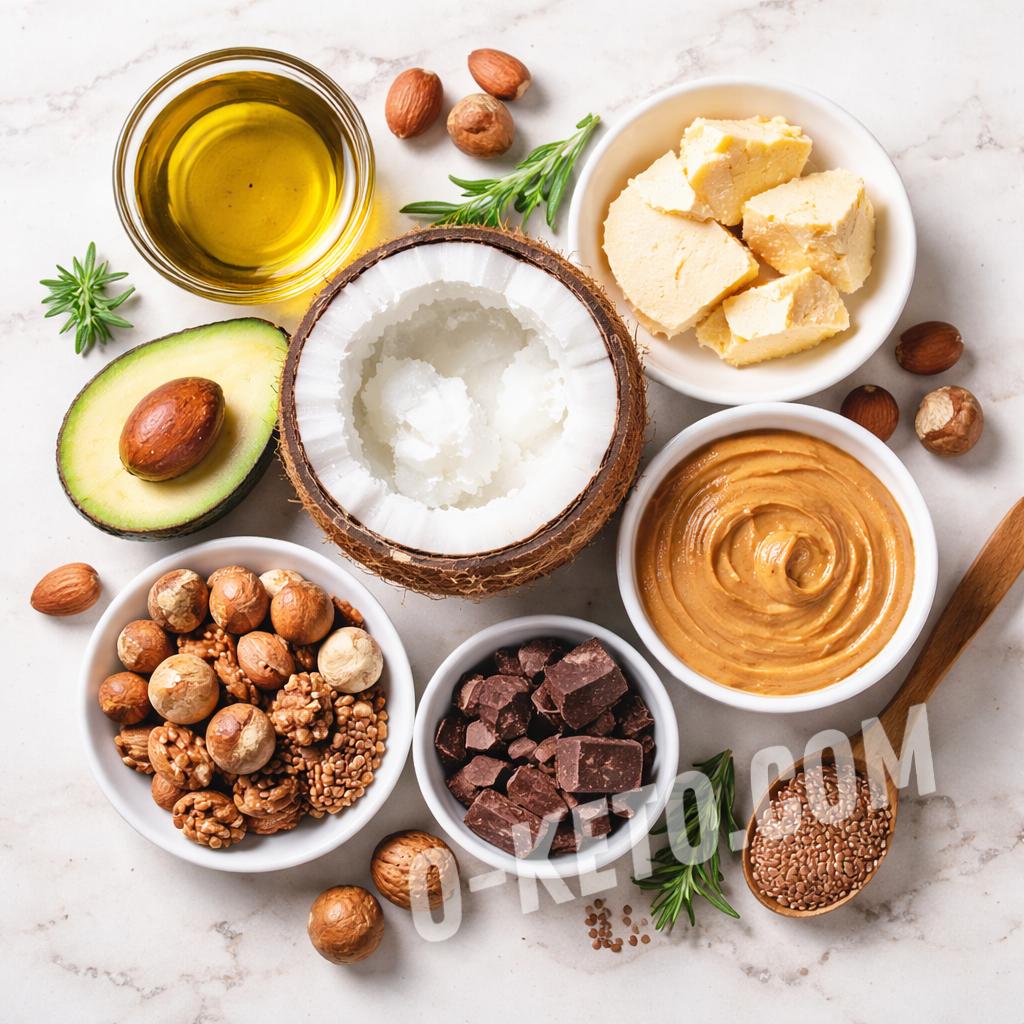
Plant fats in cooking are often perceived merely as a source of energy; however, their role is much broader. They shape texture, influence dish stability, provide plasticity, and directly determine organoleptic properties—from creaminess to crunchiness. This is especially important in recipes with reduced carbohydrate content or without sugar, where fats partially compensate for the lost functions of other components.
Functions of Plant Fats in Cooking
Fats perform a number of key technological tasks without which it is impossible to achieve the desired structure of a dish:
they create softness and plasticity of texture;
they reduce dryness and brittleness of products;
they participate in moisture retention;
they ensure structural stability;
they influence mouthfeel and flavor richness.
In desserts and baked goods, fats are particularly important. For example:
adding vegetable oil to sponge cake makes it more elastic and prevents cracking when rolling;
in muffins, replacing butter with vegetable oil increases moisture without a watery effect.
Key Properties of Plant Fats
For proper use, it is important to understand the basic characteristics of fats:
melting point—determines whether the product will be solid or soft;
degree of saturation—influences density and stability;
crystallization behavior—responsible for texture, especially in glazes and chocolate;
viscosity—influences fat distribution in the mass;
oxidation stability—determines shelf life and stability.
These parameters allow predicting the behavior of fat in a recipe: whether the cream will hold its shape, how dense the structure will be, or how the product will feel when bitten into.
Main Types of Plant Fats and Their Applications
Coconut Oil. Has high saturation and relatively low melting point. It hardens quickly when cooled and melts easily in the mouth. Used in:
candies and bars for stabilization;
creams to improve texture;
ice cream to reduce crystallization;
glazes to form structure.
Cocoa Butter. A key component of chocolate. Forms a dense, stable structure and provides characteristic crunch:
used in chocolate and glazes;
ensures stability at room temperature;
creates “snap” and a clean cut.
Nut Oils. Primarily responsible for flavor and aroma, rather than structure:
soften the texture of fillings;
enhance flavor profile;
do not provide pronounced stability due to low melting point.
Liquid Plant Oils. Include olive oil and grape seed oil. They are used where softness is required:
Do not structure the mass, remain liquid at room temperature, act as a softening fat phase
Technological Techniques for Use
adding 5–10% liquid oil to chocolate makes the glaze softer;
using solid fats increases the stability of products;
combining different fats allows precise control over texture;
high-protein products require additional fat to eliminate dryness;
in creams, fat reduces the crystallization of sweeteners and improves consistency.
Common Mistakes When Using Plant Fats:
reducing the amount of fat without compensating with other components;
ignoring the melting point;
using only one type of fat without considering the recipe’s tasks;
misunderstanding the role of fat in the product’s structure;
focusing only on calorie content instead of functionality.
When there is insufficient fat, products become dry, brittle, or, conversely, overly dense and “rubbery”.
Practical Approach to Choosing Fat. The choice of plant fat should be based on the desired outcome:
for a crispy structure—solid fats with a high melting point;
for softness—liquid oils;
for stability—a combination of solid and liquid fats;
for flavor—adding nut oils;
for plasticity—using coconut oil.
Plant fats are not just an ingredient but a tool for managing texture. Understanding their properties allows for the creation of stable, predictable, and technologically sound dishes, especially in low-carbohydrate and functional cooking.
Scenarios for Using Plant Fats
To achieve a solid, crispy stable glaze. To form a dense, thermally stable glaze, cocoa butter is used. It has pronounced crystallization behavior, which results in a dense structure with characteristic crunch and stability at room temperature.
To make a soft “biteable” glaze. For a more plastic glaze texture, a small amount of liquid plant oils, such as grape seed oil, is used in combination with chocolate. This reduces the brittleness of the coating and makes it softer when bitten into.
To structure the filling. If it is necessary for the filling to stabilize and hold its shape after cooling, coconut oil is used. It hardens quickly in the refrigerator, increases the density of the mass, and ensures the stability of the product.
To make the cream smoother. When preparing creams, adding coconut oil or increasing the proportion of cocoa butter forms a more homogeneous fat matrix. This improves texture and reduces the likelihood of sweetener crystallization.
To soften high-protein or dry mass. In recipes with high protein or dietary fiber content, adding coconut oil makes the texture less dry, reduces crumbliness, and improves the overall mouthfeel of the product.
To increase the plasticity of sponge cake. Liquid plant oils, especially those neutral in flavor, make sponge cake more flexible and moist. This prevents cracking when rolling and improves the crumb structure.
To add aroma and depth of flavor. Nut oils are used to enhance the flavor profile. They add richness, make the texture more paste-like, and improve the organoleptic perception of fillings and creams.
To reduce the density of chocolate mass. Adding a small amount of fractionated coconut oil increases the flowability of the chocolate mass. This makes the texture softer and easier to work with.
To achieve a “melting” texture in the mouth. Coconut oil, due to its low melting point, ensures the product melts quickly. This creates a pronounced sensation of creaminess and lightness when consumed.
Any remaining questions? Ask chatGPT.:
If you have any questions по теме статьи "Features of using vegetable fats in cooking", you can ask them to AI. Please note, a low-cost OpenAI model is used. It may answer questions about disease treatment with errors!
Ask a question
List of videos from YouTube with product review "Features of using vegetable fats in cooking":
If you have any opinions or additions on this topic, you can leave a comment about the article. "Features of using vegetable fats in cooking":
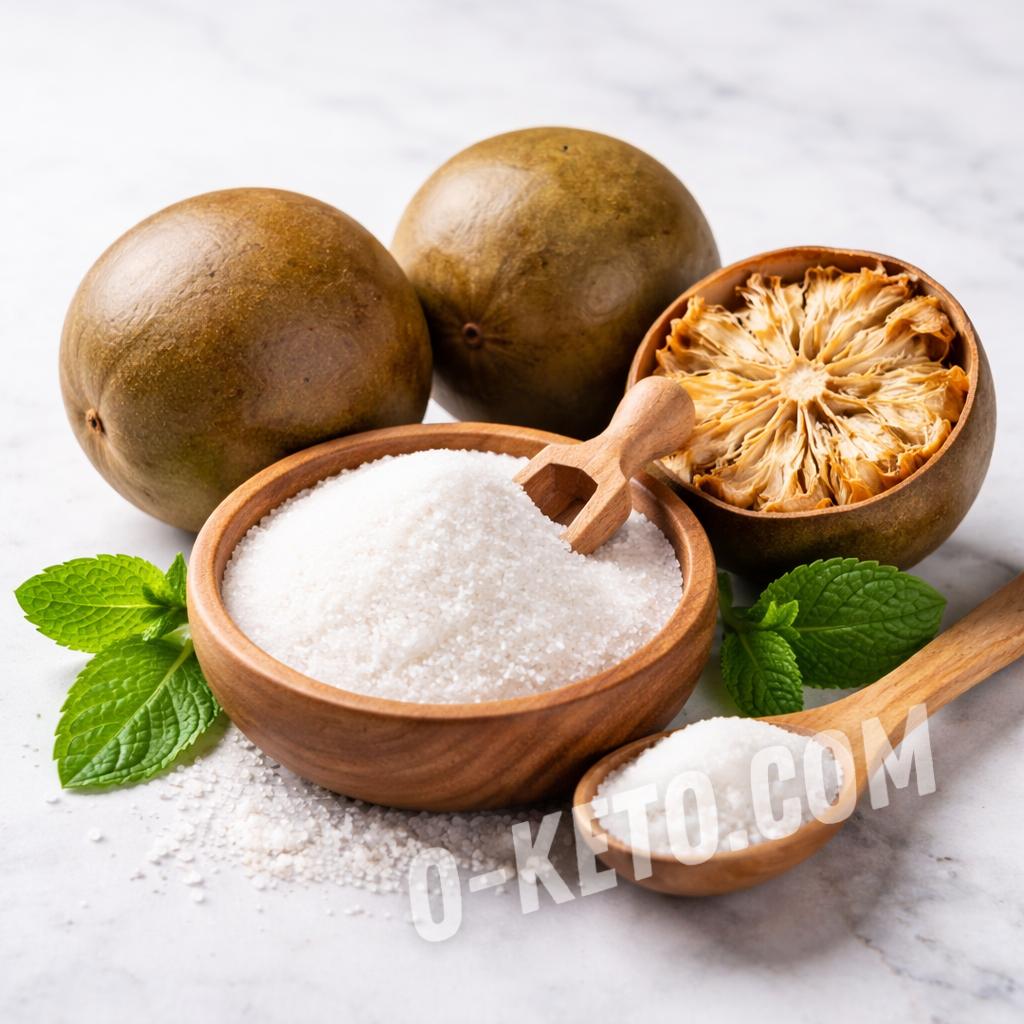
Monk fruit (luo han guo) is a natural intense sweetener that is increasingly used in low-carb and keto cooking. It is valued for its high sweetness, lack of impact on glucose levels, and good technological stability. However, when working with it, it is important to consider a number of features that distinguish it from sugar and even other sweeteners.
Chemical Nature and Flavor Characteristics
The sweetness of monk fruit is provided by mogrosides — natural compounds with a high intensity of sweetness:
sweetness 150–200 times higher than sugar;
develops more slowly but lasts longer;
has additional flavor notes — nutty, woody, sometimes caramel;
the higher the degree of purification, the more neutral the taste.
They are not carbohydrates in the conventional metabolic sense and do not behave like glucose or sucrose in the body.
These features make it not universal, but rather a tool for specific flavor profiles.
Metabolic Properties and Effects on the Body
Monk fruit is considered a metabolically neutral sweetener. It is not broken down like regular carbohydrates and has little effect on metabolism:
Reactions from the gastrointestinal tract are more often related not to monk fruit itself, but to additives, such as erythritol, which is often included in commercial blends.
Technological Features in Cooking
Monk fruit is exclusively a sweetener and not a full substitute for sugar in recipes. It does not perform structural functions:
does not create volume and mass;
does not retain moisture;
does not participate in the Maillard reaction;
does not caramelize;
used in microdoses.
This means that when baking or preparing desserts, it is necessary to separately compensate for texture — through fats, fibers, proteins, or other ingredients.
Combinations and Use in Recipes
Monk fruit works well as part of combinations with other sweeteners, allowing for a cleaner taste and balanced sweetness:
In neutral or delicate recipes, its use may be less appropriate due to its characteristic flavor notes.
Practical Recommendations for Use:
adjust dosage only experimentally;
consider the concentration of mogrosides in the specific product;
use minimal amounts — milligrams or grams;
test combinations with other sweeteners;
do not rely on it as a structural substitute for sugar.
Conclusion
Monk fruit is an effective tool for creating low-carb and keto desserts with minimal glycemic load. It is stable, safe from a metabolic standpoint, and has an interesting flavor profile. However, its use requires an understanding of technological limitations and skillful combination with other ingredients.
Any remaining questions? Ask chatGPT.:
If you have any questions по теме статьи "Features of using monk fruit sweetener in cooking and nutrition", you can ask them to AI. Please note, a low-cost OpenAI model is used. It may answer questions about disease treatment with errors!
Ask a question
List of videos from YouTube with product review "Features of using monk fruit sweetener in cooking and nutrition":
If you have any opinions or additions on this topic, you can leave a comment about the article. "Features of using monk fruit sweetener in cooking and nutrition":
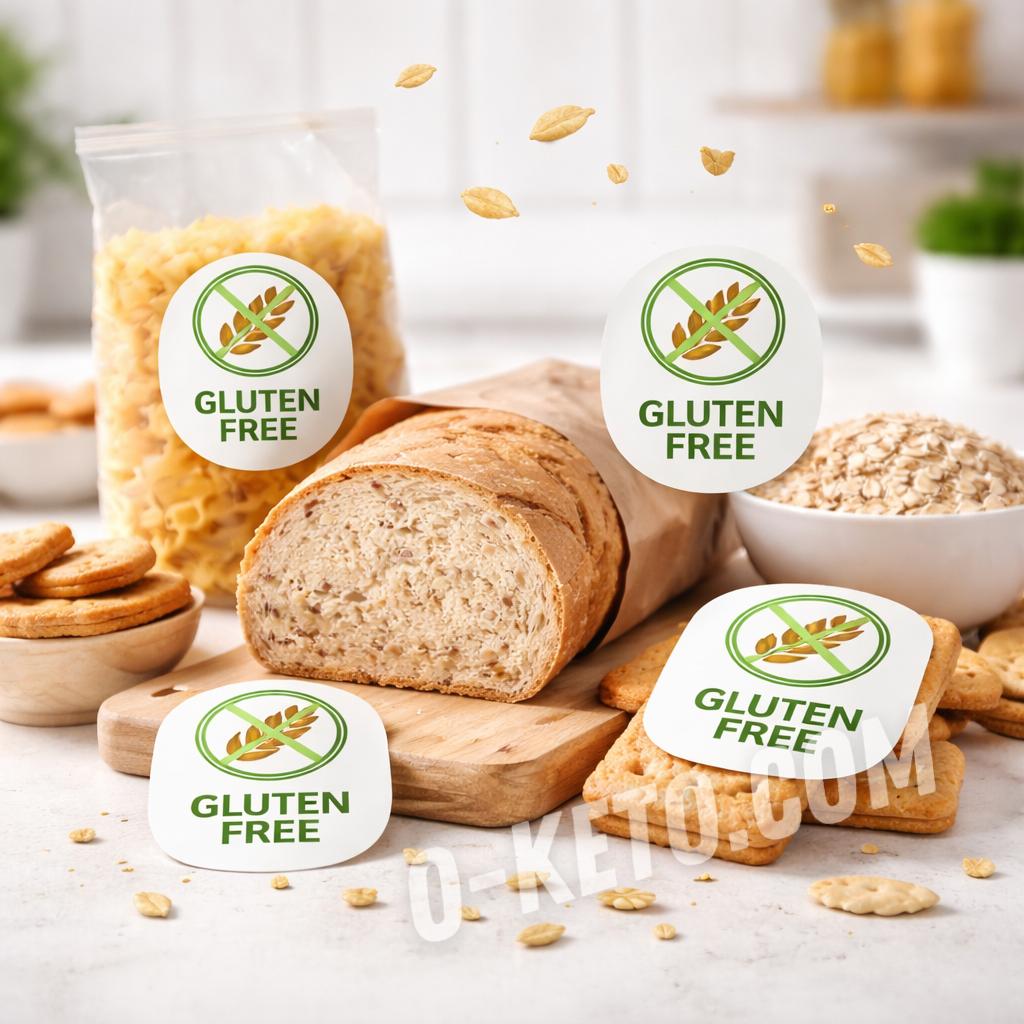
The “gluten-free” label is perceived as a guarantee of complete safety. It creates the impression that this is a binary state: either gluten is present or it is not. In practice, things are much more complicated. This label does not mean the absolute absence of gluten, but rather compliance with certain standards that vary depending on the country, production technologies, and control methods.
What “gluten-free” really means
The basic international benchmark is no more than 20 ppm (mg per kg of product). This is a compromise between production capabilities and safety for most people with gluten sensitivity.
It is impossible to completely eliminate gluten due to the peculiarities of agriculture and logistics. Even if a product initially does not contain gluten, it may come into contact with it during cultivation, storage, or processing.
Different countries – different requirements
The same threshold of 20 ppm does not mean the same level of control. Approaches vary significantly:
In the USA, only the final product is tested (the absence of gluten in the tested sample does not mean it is also absent in other samples from the same batch), and the responsibility lies with the manufacturer;
In Canada, the composition of raw materials is controlled, and the use of gluten-containing components is prohibited;
In the EU, a traceability system is in place, and categories of “gluten-free” and “very low gluten content” are defined;
In Russia, requirements are distributed across different regulations, and there is no single standard;
In Asian countries, the level of control varies widely—from strict to formal.
As a result, the same label on the packaging can indicate a completely different level of risk.
Labeling is not certification
In many countries, there is no mandatory “gluten-free” certification. The manufacturer claims compliance with the requirements and bears legal responsibility.
Control often occurs after the product has entered the market—through inspections or complaints. This means that some products may not comply with the declaration until a violation is identified.
Cross-contamination
Even if a recipe does not contain gluten, it can enter the product through production. This is called cross-contamination:
using the same equipment for different products;
flour residues in the air and ventilation;
shared storage and transportation;
staff contact with gluten-containing products.
Flour particles can remain in the air and settle on equipment, so even thorough cleaning does not always guarantee the absence of contamination.
Problematic product categories. Some products have an increased risk of gluten content even when labeled:
oats—often contaminated during harvesting and storage;
fermented products—gluten may be partially broken down but does not disappear completely;
sauces, beverages, and starters—complex technological processes increase the risk of errors.
Limitations of laboratory tests
The main analysis method—ELISA—looks for whole protein structures. During fermentation, gluten is broken down into fragments that the test may not detect.
However, the human immune system can react even to these fragments. As a result, a product may pass the test as “clean” but still cause a reaction.
Why the label can be misleading
The situation is complicated by the fact that:
some manufacturers use a common conveyor and perform minimal control;
others implement strict protocols but still indicate “traces” due to legal risks;
testing methods have limitations;
legislation is not unified.
As a result, a product labeled “may contain traces” can sometimes be safer than one labeled “gluten-free.”
How to enhance the safety of your choices
The “gluten-free” label is not an absolute guarantee but a result of compliance with certain conditions and probabilities. Behind it lies a complex control system with weak points. Understanding these nuances allows for a more informed approach to product selection.
If you have celiac disease or it is vital for you to buy gluten-free products, then you should:
pay attention to voluntary certifications—often certification marks from celiac disease societies are much more accurate than regular “gluten-free” labeling;
avoid highly processed and fermented products;
be cautious with oats without special labeling;
evaluate the manufacturer and its technological level.
Any remaining questions? Ask chatGPT.:
If you have any questions по теме статьи "Why the “Gluten-Free” label means nothing", you can ask them to AI. Please note, a low-cost OpenAI model is used. It may answer questions about disease treatment with errors!
Ask a question
List of videos from YouTube with product review "Why the “Gluten-Free” label means nothing":
If you have any opinions or additions on this topic, you can leave a comment about the article. "Why the “Gluten-Free” label means nothing":
Only verified information backed by research, physiology, and biochemistry about your health.
Why diseases occur, how to heal with proper nutrition, vitamins, and minerals, what therapeutic doses to take, and which diet is optimal for your health. What tests to take and how to interpret the results.
In the settings, you can also enable knowledge based on GNM and homeopathy.
We use cookies to ensure the best presentation of our website. If you continue to use the site, we will assume that you are satisfied with it.