


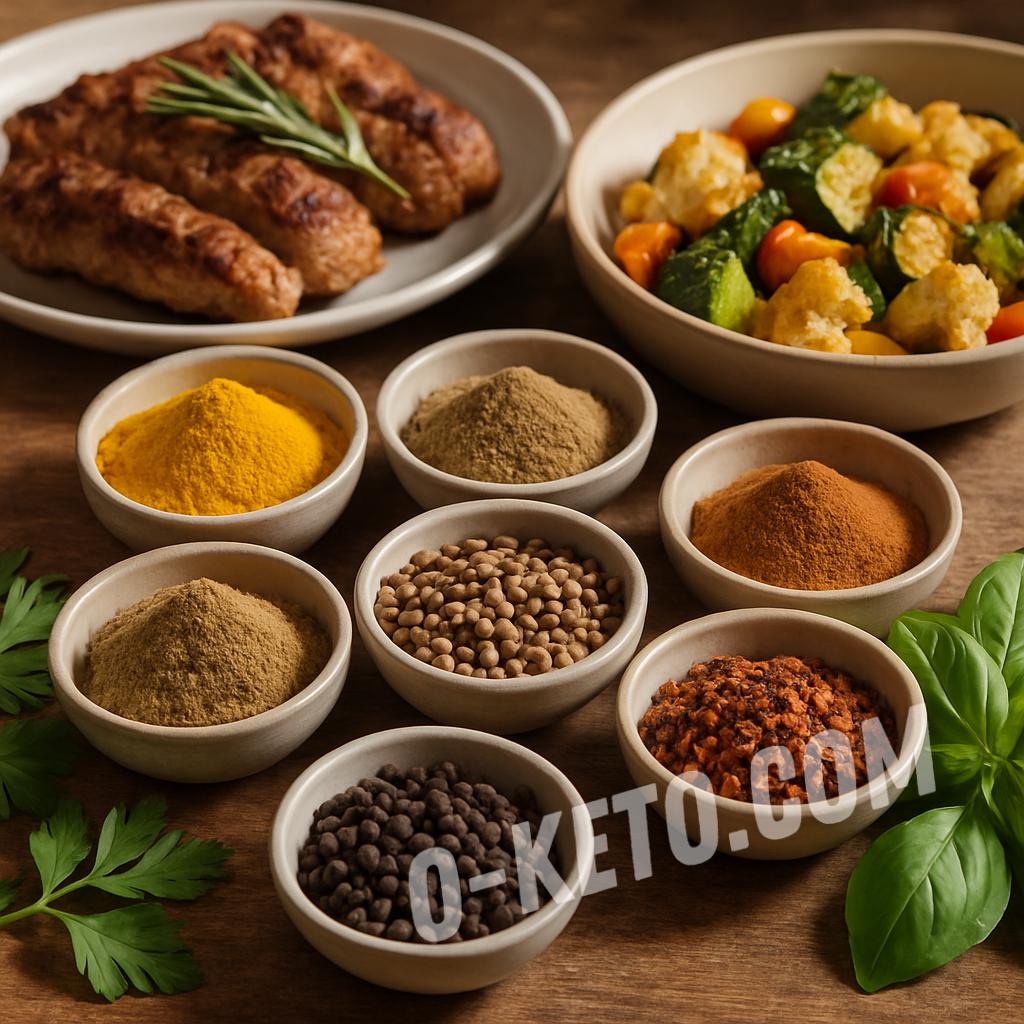

Spices in low-carb cooking are not only about aroma. When a diet contains less sugar, grains, bread, and sweet sauces, spices make simple foods more expressive: meat, fish, eggs, cheese, vegetables, creamy sauces, and desserts.
A good spice should not hide the food. Its job is to highlight flavor, add warmth, freshness, heat, bitterness, or sweet aroma without extra carbohydrates. That is why low-carb cooking benefits so much from thoughtful seasoning.
Why spices matter without sugar and flour
In ordinary cooking, flavor often relies on sugar, starch, breading, sweet marinades, and thick sauces. In a low-carb diet, these tools are removed or used rarely. Food can start feeling repetitive: meat, salad, eggs, cheese, vegetables.
Spices solve this without adding meaningful carbohydrates. Coriander makes meat warmer and softer in aroma, cumin gives an eastern profile, black pepper adds depth, turmeric gives color and earthy notes, ginger adds heat and freshness, and cardamom gives sweet aroma to coffee, cocoa, and desserts.
How not to overdo it
The main rule is to start small. Most spices contain concentrated aromatic compounds, so excess quickly makes food bitter, harsh, or medicinal. This is especially true for cloves, nutmeg, star anise, asafoetida, saffron, and hot pepper.
For a first try, choose one leading spice and one or two supporting ones. For example, cumin as the base, coriander for softness, and black pepper for depth. Once the combination is clear, add herbs, acidity, garlic, mustard, or a creamy base.
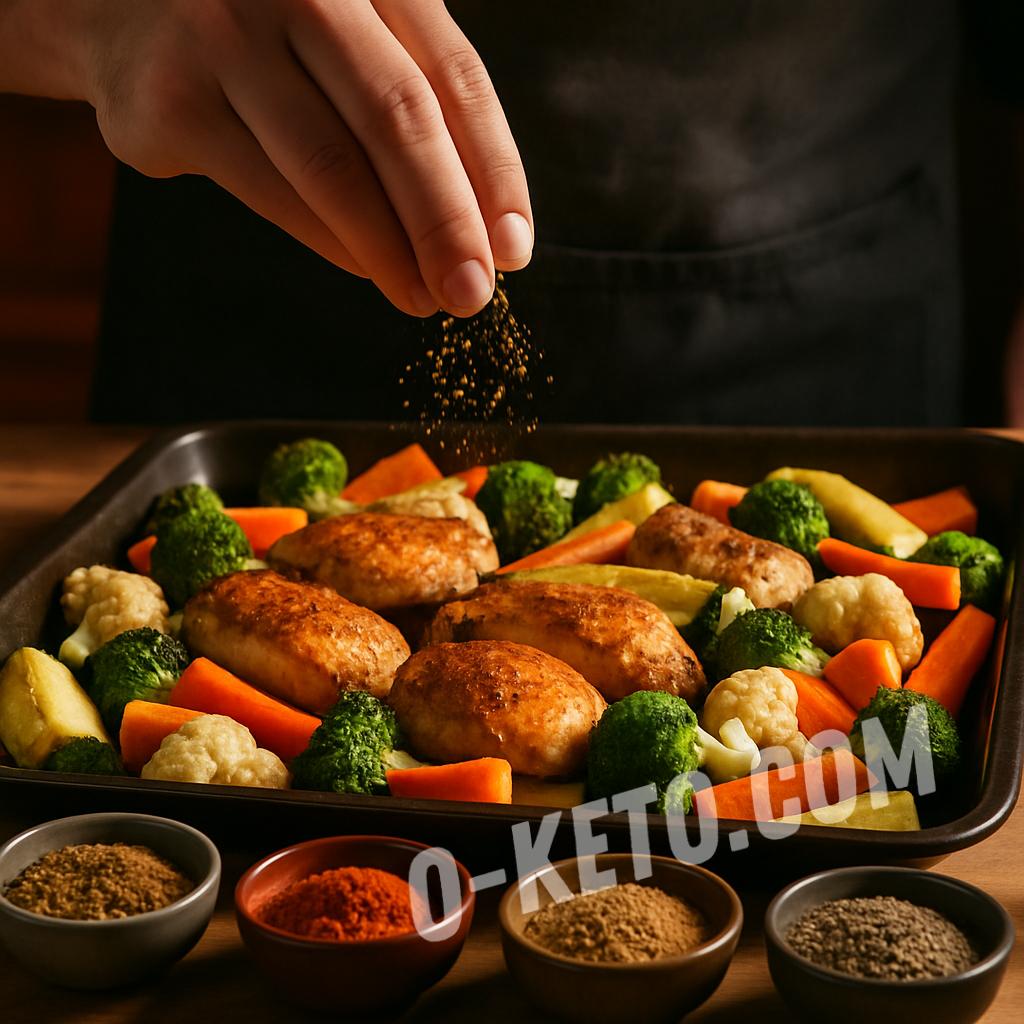
How fat carries spice flavor
In low-carb cooking, fat is not only a source of satiety but also an important medium for spices. Many aromatic compounds dissolve and spread better in fat, so ghee, butter, coconut oil, and good olive oil help carry spice flavor deeper and more evenly through the dish. That is why paprika, cumin, coriander, thyme, garlic, and curry often taste richer after a short bloom in fat than when they are sprinkled onto finished food.
This matters especially in dishes built around neutral bases such as eggs, zucchini, cauliflower, chicken breast, turkey, cottage-cheese creams, or cream sauces. When a spice is first opened in fat, the result feels more integrated and less like dry seasoning thrown on top. For keto cooking, this is practical because fat is already present in many dishes through butter, cream, fatty fish, cheese, meat juices, or olive oil.
What belongs at the beginning and what belongs at the end
Not every spice or herb likes the same stage of cooking. Seed spices and more durable dry flavors such as cumin, coriander, mustard, fennel, black pepper, paprika, curry, and other dry blends often benefit from going in early or midway through cooking. That gives them time to open in fat, broth, or cooking juices.
Fresh herbs and delicate top notes usually work better near the end. Dill, parsley, cilantro, basil, mint, chives, lemon zest, and part of fresh garlic character lose brightness under long heat. If all of them go in at the start, the dish can end up without a lively top aroma. In many home dishes, it helps to build one layer of flavor early and finish with another one right before serving.
How this works in keto dishes in practice
For an omelet or scrambled eggs, it often makes sense to warm a little ghee or butter first, briefly bloom paprika, turmeric, or black pepper in it, and only then add the eggs. For chicken or turkey, olive oil or butter can carry garlic, thyme, or paprika early, while fresh herbs and lemon come later. In a cream sauce, nutmeg and white pepper are more useful in the warm fatty base, while herbs and acidity are often better near serving.
Cold keto sauces work a little differently. Spices are not necessarily fried there, but they still benefit from a fatty base such as mayonnaise, unsweetened yogurt, sour cream, cream cheese, avocado, or olive oil. That helps the flavor distribute more softly. If the sauce contains garlic, mustard, dill, mint, or zest, a short rest usually helps the flavors come together without letting freshness disappear.
Spices for meat and poultry
Meat accepts warm, hot, and resinous aromas well. Beef and lamb pair with cumin, coriander, black pepper, rosemary, thyme, garlic, juniper, smoked paprika, and a little chili. Chicken and turkey usually work better with softer combinations: paprika, turmeric, ginger, coriander, garlic, thyme, and curry.
If the meat is fatty, the spices can be brighter because fat softens heat and carries aroma. If the meat is dry, avoid overloading it with hot pepper and add oil, cream sauce, lemon, unsweetened yogurt, or herbs.
Spices for fish and seafood
Fish needs a lighter hand. Delicate fillets are easy to overwhelm, so start with lemon zest, dill, parsley, white or black pepper, coriander, fennel, saffron, ginger, and a small amount of garlic.
Fatty fish can handle stronger flavors: smoked paprika, chili, mustard, curry, sesame, and ginger. Shrimp and other seafood work well with garlic, pepper, lime, cilantro, ginger, and butter.
Spices for vegetables
Low-carb vegetables often taste mild: zucchini, cauliflower, broccoli, mushrooms, cucumber, leafy greens. Spices help them feel like a real dish rather than an obligatory side.
| Cauliflower | turmeric, curry, cumin, coriander, paprika |
| Zucchini | garlic, thyme, basil, black pepper, mint |
| Mushrooms | black pepper, thyme, garlic, nutmeg |
| Broccoli | garlic, pepper, lemon zest, sesame, ginger |
| Leafy greens | coriander, cumin, mustard, dill, parsley |
Vegetables almost always need fat and salt. Spices open up better with olive oil, butter, ghee, sour cream, cream, or cheese.
Spices for sauces and dressings
Sauces are the easiest way to introduce spices gradually. A cream sauce can take nutmeg, white pepper, garlic, thyme, or curry. An oil dressing can take mustard, coriander, black pepper, dill, parsley, and lemon zest.
Hot spices are best mixed with fat or an acidic base before adding them to the dish. This distributes flavor more evenly and reduces the risk of sharp pockets of heat.
Spices for desserts and drinks
In low-carb desserts, spices are especially useful because they create a sense of sweetness and depth without sugar. Cinnamon, cardamom, vanilla, nutmeg, cloves, ginger, and star anise make cocoa, coffee, cream cheese desserts, nut baking, and creamy fillings more expressive.
Coffee works well with cardamom, cinnamon, and a little nutmeg. Cocoa becomes more interesting with cinnamon, chili, vanilla, or a pinch of salt. Creamy desserts pair with vanilla, citrus zest, cardamom, and tart berries.
How to build a basic spice shelf
You do not need dozens of jars at once. Build a small set that covers the main flavor tasks: heat, warmth, herbs, color, desserts, and versatile blends.
- Black pepper for basic depth in almost any savory dish.
- Coriander and cumin for meat, vegetables, sauces, and eastern blends.
- Turmeric and paprika for color, warmth, and a mild spicy base.
- Garlic, thyme, rosemary, and basil for meat, fish, and vegetables.
- Cinnamon, cardamom, ginger, and nutmeg for desserts, coffee, and cocoa.
- Mustard, chili, and smoked paprika for strong accents.
Cautions and contraindications
Spices are not harmless dust for flavor. They contain active compounds, essential oils, and pungent substances. Culinary amounts are usually well tolerated, but large doses can irritate the stomach lining, worsen reflux, affect wellbeing, or interact with medications.
Be especially careful with hot spices in gastritis, ulcers, strong reflux, pregnancy, anticoagulant use, and individual sensitivity. Saffron, nutmeg, cloves, chili, and concentrated extracts should not be used as therapeutic doses without medical guidance.
Practical takeaway
Spices make low-carb cooking varied without sugar, flour, and starchy sauces. They can change the character of the same food: chicken can become Mediterranean, Indian, Caucasian, or creamy-herbal just through different seasonings.
Start with simple combinations, use small amounts, add fat, acidity, and salt for balance, and remember that part of flavor is built at the start while another part belongs at the very end. Then spices become a working tool rather than a chaotic shelf of jars.


